
close
Choose Your Site
Global
Social Media

 English

Views: 0 Author: Site Editor Publish Time: 2026-10-25 Origin: Site


In bustling warehouses and modern manufacturing hubs, concrete floors take a relentless beating every single shift. Maintaining distinct safety boundaries is not just about passing an OSHA audit. It forms the actual backbone of your operational workflow and 5S methodology. Facility managers face this frustrating reality daily. Painted lines degrade fast. Worker boots, dragging pallets, and heavy forklift tires grind them away. When those lines chip, you are forced into mandatory downtime for repainting, which kills productivity and spikes labor costs.
An empirical and highly effective solution to this persistent issue is the implementation of PVC floor marking tape. Designed specifically for high-traffic environments, this polymer-based material offers a robust, instant alternative to traditional liquid coatings. From an engineering standpoint, modern tapes are built to absorb kinetic energy rather than shatter under it. By examining real-world applications and comparing tape directly against traditional floor paint, we will help you select the optimal materials to maximize safety and efficiency on your shop floor.
The logistics industry is currently undergoing a massive shift in facility maintenance strategies. With the explosion of round-the-clock e-commerce fulfillment, operations managers simply cannot afford 72-hour curing windows for epoxy paint. Recent industry analyses indicate a sharp migration toward high-tensile polymer marking solutions. This transition is heavily driven by the need for rapid layout reconfigurations and stricter compliance with dynamic safety standards. Modern facilities demand infrastructure that adapts instantly. Consequently, zero-cure-time materials are rapidly becoming the new baseline for warehouse design, allowing businesses to scale without halting daily operations.
Unmatched Durability: Premium vinyl tapes feature a dense composition and aggressive adhesives, withstanding harsh scraping and pivoting tires without fracturing.
Zero Operational Downtime: Taped lines can be driven over or walked on immediately after application, completely bypassing the curing times required by industrial paint.
Smart Structural Design: Beveled edges and low-profile thickness prevent hard resin wheels on pallet jacks from snagging or tearing the borders.
Superior Cost-Effectiveness: The long-term return on investment is drastically higher due to minimal maintenance and the total elimination of facility shutdowns.
Standardized Compliance: Available in highly visible safety colors, these tapes make it effortless to organize shipping zones and highlight hazardous areas.
To truly understand how floor marking materials survive in harsh industrial environments, you have to look beneath the surface. The resilience of these safety lines is not accidental. It is the result of specific chemical engineering designed to absorb, distribute, and deflect mechanical stress.
Polyvinyl chloride is a widely utilized synthetic plastic polymer renowned for its exceptional structural integrity. In the context of facility marking, it offers a unique blend of flexibility and rigid strength. Picture a fully loaded electric pallet jack rolling over a safety line. Instead of shattering like dried paint, the material compresses and stretches microscopically under the immense pressure. This inherent elasticity allows the tape to absorb blunt force and seamlessly return to its original state.
The upper wear layer of any floor marking is only as effective as the adhesive anchoring it to the concrete. Industrial-grade solutions utilize advanced pressure-sensitive adhesives, typically formulated from synthetic rubber or heavy-duty acrylic blends. Rubber-based adhesives provide an extremely high initial tack, bonding instantly to the porous micro-structures of unsealed concrete. This unyielding bond prevents the tape from peeling or shifting, even when subjected to the severe lateral shear stress generated by turning vehicles.
A critical failure point for lower-quality tapes is the edge profile. If a safety line features a blunt vertical edge, the wheels of push carts will strike it directly. This creates friction that eventually rolls the material backward. Premium tapes combat this physical reality with a tapered, beveled edge. This aerodynamic design allows hard resin wheels to roll smoothly up and over the boundary, deflecting the horizontal force downward into the floor.
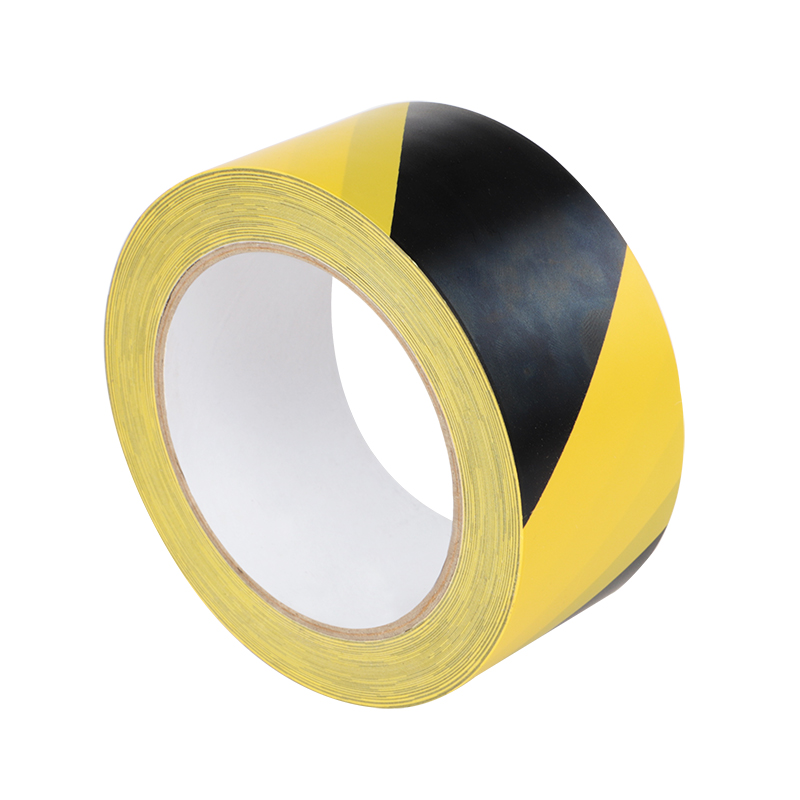
Walk onto any busy assembly line, and you will see walkways experiencing thousands of footsteps every single shift. Workers wearing heavy-duty, steel-toed boots with aggressive tread patterns generate significant friction. Often, these boots carry dirt, grease, and microscopic metal shavings, effectively acting like sandpaper against the floor surface.
Standard paint quickly loses its finish under this continuous human traffic. Conversely, the upper wear layer of high-quality industrial tape is specifically treated to resist severe scuffing. Because dense vinyl resists the accumulation of dirt and rubber marks, the boundary maintains its structural integrity longer. When scuffs do occur, the smooth surface energy allows them to be wiped away during routine maintenance, preserving a pristine appearance without requiring a fresh coat of color.
A safety boundary is entirely useless if it cannot be clearly seen. With painted lines, the pigment is merely skin-deep. As the top microscopic layer wears away, the color fades, leading to dangerous ambiguity. Premium tapes circumvent this issue by infusing bright safety colors entirely throughout the thickness of the polymer substrate. Even after years of heavy footfalls, the bright yellow, red, or blue hues remain vivid and instantly identifiable.
While pedestrian traffic presents a steady abrasive challenge, the true test of any floor marking system emerges when heavy machinery enters the equation. Wheeled traffic introduces crushing weights and intense shear forces that can destroy inferior materials in a matter of days.
Manual and electric pallet jacks utilize small, incredibly hard polyurethane wheels. Because these wheels lack pneumatic cushioning, they transfer the entire weight of a heavy load directly into a very small contact patch on the floor. This creates extreme point-load pressure. The dense molecular structure of heavy duty industrial floor tape resists this localized compression. The polymer core distributes the weight evenly across the substrate, preventing the hard wheels from cutting through the material.
Forklifts are notorious for destroying warehouse floor markings. The primary culprit is not just the sheer weight of the vehicle, which can exceed 9,000 pounds, but the pivoting motion of the tires. When a heavy forklift turns its solid rubber tires sharply while stationary, it generates massive rotational shear force that literally twists the floor surface. Specialized high-tensile tapes are formulated specifically to resist this destructive motion, keeping your staging areas intact even when dragging wooden pallets.
The debate between utilizing tape or paint for visual communication is common among warehouse managers. While paint has been the historical default, modern material science has decisively shifted the operational advantage toward industrial tape.
Evaluation Metric | Industrial Floor Paint | Polymer Floor Marking Tape |
|---|---|---|
Installation & Prep Time | Extensive grinding, masking, and multiple coats required | Minimal surface prep; clean, peel, stick, and tamp |
Facility Downtime | 24 to 72 hours for curing and off-gassing | Zero hours; ready for heavy traffic immediately |
Durability in High Traffic | Prone to chipping, fading, and cracking under point-loads | High resistance to impacts, shear force, and scuffs |
Removal Process | Requires heavy grinding or toxic chemical stripping | Peels up cleanly in large pieces with minimal residue |
The most significant hidden cost associated with floor paint is the mandatory loss of productivity. Applying industrial epoxy requires the concrete to be shot-blasted or acid-etched. Once applied, the paint needs anywhere from 24 to 72 hours to properly dry and cure. During this period, the aisle must be completely shut down. Tape application is a dry, instant process. Once the floor is clean, the tape is rolled out and tamped down. Forklifts and personnel can resume operations immediately.
Warehouses today are highly dynamic environments. Layouts frequently change as inventory shifts or new racking systems are installed. Removing old painted lines is a labor-intensive nightmare that requires heavy grinding equipment, creating hazardous silica dust. Vinyl tape offers unparalleled flexibility. Engineered with high tensile strength, the tape can be pulled up in cohesive pieces when necessary, allowing safety teams to rapidly reconfigure aisle layouts.
Selecting the correct specification for your facility ensures maximum lifespan. Not all tapes are created equal, and understanding technical features is vital for a successful application. You need to match the material to the actual operational hazard.
The thickness of floor tape, measured in mils, dictates its appropriate use case. A standard 5-to-10 mil tape is excellent for pure foot traffic zones and wall markings. However, for areas subjected to heavy forklift traffic, managers should seek out warehouse aisle marking tape ranging from 30-mil to 50-mil in thickness. This added material provides the necessary tensile strength to absorb heavier impacts without stretching or tearing.
Standardizing your visual communication prevents accidents and eliminates confusion on the floor. Yellow is universally recognized for aisleways and traffic lanes. Red denotes fire equipment or high-danger zones, while green is utilized for safety equipment like eye-wash stations. By sourcing standard tapes in these precise colors, safety officers can implement an intuitive visual workplace.
Even the highest quality heavy-duty tape will fail prematurely if applied incorrectly. Following strict installation protocols ensures the pressure-sensitive adhesive bonds permanently to the concrete substrate.
The floor must be immaculate before application. Dirt, oil, and moisture act as physical barriers, preventing the adhesive from bonding. The best practice involves sweeping the area, followed by cleaning with an industrial degreaser. Once clean, the floor must be completely dried. Many professionals recommend a final wipe-down with isopropyl alcohol to remove any remaining chemical residue.
Pressure-sensitive adhesives require substantial mechanical pressure to flow into the microscopic pores of the floor. Simply walking over the newly applied line is not enough. The final, most crucial step is tamping. Facilities should drive over the tape slowly with a forklift tire, or use a heavy tamp roller weighing at least 150 pounds. This heavy compression activates the adhesive, transforming a temporary stick into a permanent bond.
Polymer floor marking tape provides a highly durable, intelligent solution for modern industrial environments. By seamlessly handling heavy foot and cart traffic, this advanced material eliminates the frustrating cycle of fading lines and frequent repainting. Facilities immediately save money by avoiding costly operational downtime and reducing long-term maintenance labor.
Investing in high-quality industrial tape keeps your warehouse meticulously organized and unequivocally safe. If your facility is struggling with fading paint and constant floor maintenance, it is time to upgrade your safety infrastructure. Evaluate your traffic levels, identify your specific hazard zones, and head over to https://www.ipvctape.com to select the premium, zero-cure-time floor marking solutions engineered exactly for your operational demands.
Depending on the volume of traffic and the thickness of the material, high-quality warehouse marking tape can last anywhere from 1 to 5 years. Areas subjected to heavy forklift pivoting may require more frequent touch-ups than pure foot-traffic zones or light assembly areas.
Dragging heavy wooden pallets with exposed metal nails can damage almost any floor surface, including industrial epoxy paint. However, premium tapes engineered with beveled edges and 50-mil thickness are significantly more resistant to severe scraping and tearing compared to standard, thin vinyl tapes.
Yes. Once the tape is properly applied and thoroughly tamped down to activate the adhesive, it can easily withstand daily cleaning from commercial floor scrubbers, water, and standard industrial detergents without peeling, lifting, or losing its vibrant safety color.
Surface preparation is the most critical step. You must sweep the area entirely free of dust and debris. Next, scrub the concrete with an industrial degreaser to remove hidden oils, rinse it, and let it dry completely. A final wipe with isopropyl alcohol ensures no chemical residue is left behind to interfere with the adhesive bond.
While it is physically possible, it is not recommended for high-traffic areas. The tape's adhesive will bond to the old paint rather than the concrete. If that old paint chips or flakes away under the pressure of a forklift, the tape will lift right up with it. For maximum durability, always apply tape directly to clean, bare concrete.
No. One of the primary operational benefits of tape over traditional paint is its removability. While the adhesive bond is incredibly strong, the high tensile strength of the vinyl allows it to be pulled up in solid pieces without leaving excessive sticky residue or requiring harsh chemical solvents.
No. Unlike floor paint that requires hours or even days to dry, cure, and release hazardous fumes, this material requires zero cure time. You can apply the lines, tamp them down with a roller or forklift, and immediately resume heavy foot and cart traffic over the designated area.


