
close
Choose Your Site
Global
Social Media
 English
Views: 0 Author: Site Editor Publish Time: 2026-08-27 Origin: Site


The hidden operational drain in high-traffic facilities often lies right underfoot. You see it every day: the constant cycle of scraping up and replacing shredded, peeling floor lines. Standard marking solutions fail rapidly under the stress of forklift pivoting, pallet dragging, and industrial scrubbers. This leads directly to OSHA compliance gaps, immediate safety hazards, and compounding labor costs. We need a technical evaluation framework for selecting true heavy-duty floor marking tape. This means focusing on material science, adhesive performance, environmental resilience, and facility-specific implementation realities. Stop wasting maintenance hours on temporary fixes. We will break down exactly what makes a floor tape survive heavy machinery and how to install it so it stays down permanently.
Standard vinyl tape is insufficient for heavy machinery zones; industrial PVC floor tape (typically 30+ mils thick) is the baseline for surviving forklift traffic and heavy pallet skids.
Physical design features—specifically beveled edges and scuff-resistant top layers—are critical to deflecting impact, preventing edge-curling, and resisting color fade over time.
Long-term value heavily favors premium tape over paint when factoring in zero cure time, eliminated facility downtime, and rapid 5S layout adjustments.
Adhesive failure is rarely a product defect; 90% of tape longevity is dictated by strict surface preparation, mechanical tamping, and matching the adhesive to extreme environments (e.g., cold storage, washdown zones).
The initial purchase price of standard commercial tape is deceptive when you evaluate its actual impact on facility operations. When thin vinyl tape fails, it does not simply disappear. It shreds, stretches, and leaves behind a stubborn layer of adhesive residue mixed with warehouse dirt. The labor required to remediate this failure is intensive and pulls maintenance personnel away from equipment repairs.
Removing degraded tape requires a specific, time-consuming sequence. Maintenance teams must cordon off active aisles, disrupting material flow. They apply harsh chemical solvents like d-Limonene or MEK to break down the remaining adhesive. Workers then manually scrape the concrete with long-handled floor razors. Finally, they must thoroughly wash and dry the surface before applying new lines. In high-traffic zones where standard tape requires replacement every few weeks, this labor drain becomes a continuous operational bottleneck. Heavy-duty alternatives alter this replacement cycle, extending the lifespan of floor markings from weeks to years.
Regulatory bodies require clear, visible aisle marking and hazard delineation to maintain safe walking-working surfaces. OSHA standard 1910.22 dictates that permanent aisles and passageways must be appropriately marked. When floor lines fade, tear, or lift entirely, the facility falls out of compliance immediately.
Clear demarcation between pedestrian walkways and heavy machinery zones is your primary defense against workplace accidents. Faded or missing lines obscure the visual boundaries that forklift operators rely on to navigate blind corners and intersections safely. A 10,000-pound forklift carrying a full load cannot stop instantly. If the visual cue for a pedestrian crossing is missing because the tape peeled up last week, the liability risks are severe. Proactive floor marking ensures visual communication remains intact and highly visible regardless of the traffic volume passing over it.
Painting floor lines has long been the default method for warehouse demarcation due to its permanent integration with the concrete surface. When properly applied, epoxy or polyurethane paints bond directly to the substrate, offering high resistance to scraping and chemical spills. However, the application process is highly disruptive to daily operations.
Painting requires significant facility shutdowns. You must accommodate extensive curing times, often up to 72 hours for heavy forklift traffic, and manage off-gassing fumes. Furthermore, concrete requires expensive grinding or shot-blasting to prepare the surface for adhesion. When facility layouts need to change to accommodate Lean or 5S updates, removing painted lines requires aggressive mechanical grinding. This generates silica dust and permanently scars the concrete floor, leaving a "ghost line" that confuses operators.
Standard commercial floor tape typically features a thin profile, usually measuring between 5 and 7 mils in thickness, paired with a low-tack adhesive. You find this material in big box stores, designed strictly for light-duty applications and pedestrian-only zones.
The performance reality of standard vinyl in a heavy industrial setting is poor. The thin polymer is highly susceptible to stretching, tearing, and lifting. When a forklift turns its hard polyurethane drive tire directly on the line, the tape stretches beyond its elastic limit. The low-tack adhesive cannot resist the shear force, causing the tape to snap, curl at the edges, and detach from the floor. Dirt immediately packs under the curled edge, guaranteeing total failure within days.
Engineered specifically for heavy machinery environments, industrial PVC floor tape utilizes advanced polymers, aggressive pressure-sensitive adhesives, and exceptionally thick profiles. These materials absorb and deflect mechanical impact rather than yielding to it.
The primary advantage of this heavy-duty standard is the immediate return to service. There is zero cure time required. Once you lay the tape and tamp it down with a heavy roller, forklifts can drive over it immediately. This eliminates the operational downtime associated with paint while providing a durability profile that vastly exceeds standard vinyl.
Feature | Painted Lines | Standard Vinyl Tape | Heavy Duty PVC Tape |
|---|---|---|---|
Application Time | High (Requires 24-72h curing) | Low (Immediate use) | Low (Immediate use) |
Durability Profile | High (Prone to chipping over time) | Low (Tears and stretches easily) | Extreme (Impact and shear resistant) |
Removal Process | Mechanical grinding, leaves scars | Leaves heavy adhesive residue | Clean removal in one solid piece |
Layout Flexibility | Rigid and permanent | High | High |
Surface Prep Required | Shot-blasting or acid etching | Basic sweeping | Degreasing and drying |
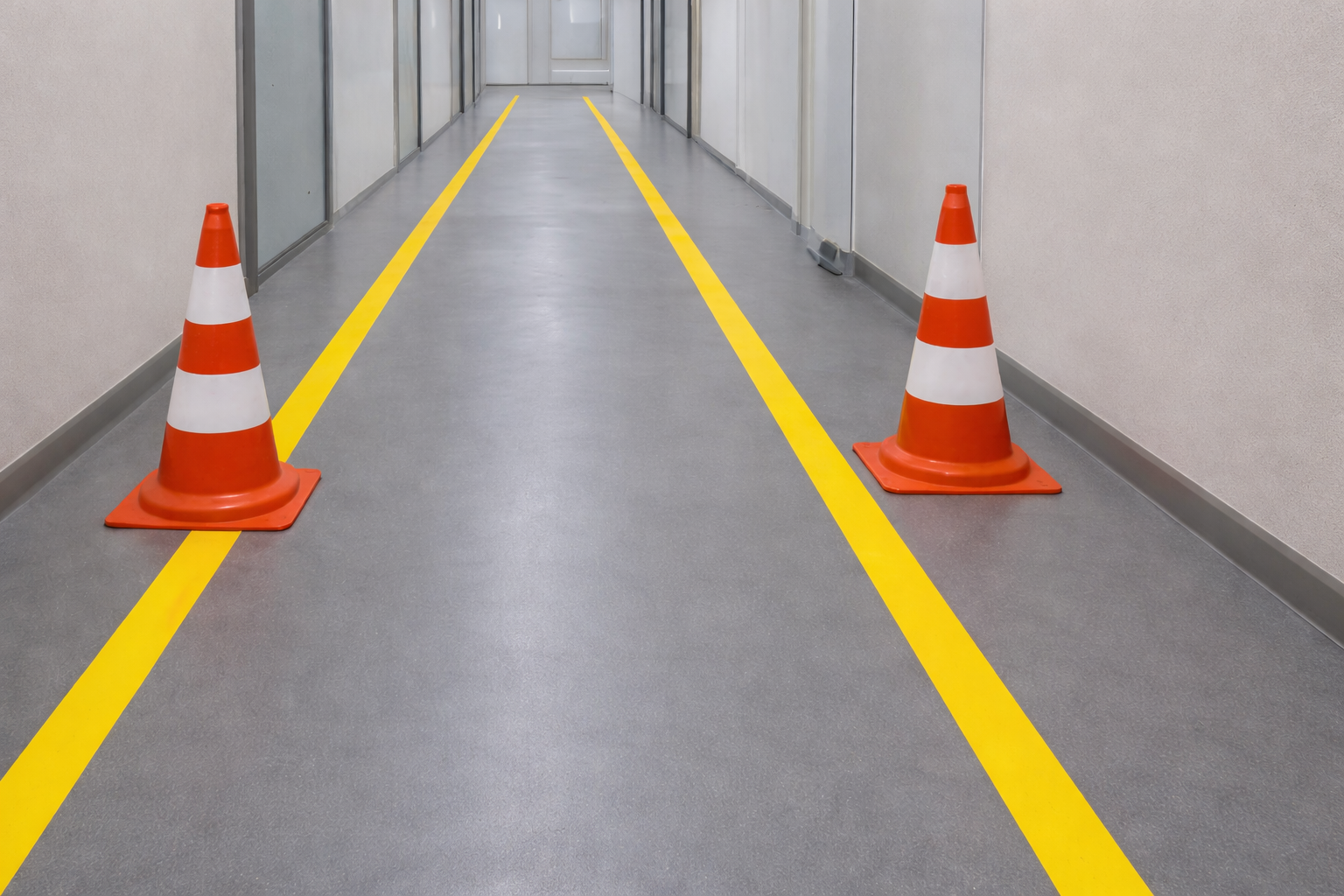
The physical thickness of the tape, measured in mils (thousandths of an inch), directly correlates to its ability to survive industrial abuse. A 30+ mil thickness is widely recognized as the industry standard for extreme durability. At this thickness, the material possesses enough structural integrity to withstand the compressive force of heavy wooden pallets being dragged across the floor without tearing.
Beyond raw thickness, the physical profile of the tape dictates its longevity. Premium Heavy Duty Floor Marking Tape features engineered beveled edges. This sloped edge is a specific design element based on physics. Instead of presenting a vertical wall that pallet jacks and forklift wheels catch and crush, the beveled edge acts as a ramp. Heavy wheels roll smoothly up and over the tape. This prevents edge-curling, which is the most common starting point for tape failure in high-traffic intersections.
The surface of the tape must endure constant abrasion from hard tires, broken wooden pallets, and the stiff grit brushes of industrial floor scrubbers. A ruggedized topcoat resists scuffing and prevents the underlying color pigment from wearing away. High-visibility color vibrancy must remain intact to ensure ongoing safety compliance. The top layer must also resist UV degradation if exposed to natural light from open loading dock doors.
Chemical resistance is equally important in manufacturing and processing facilities. Floors in these environments frequently face oil spills, grease, hydraulic fluid leaks, and harsh industrial solvents. The top layer of the tape must be non-porous and chemically inert. This prevents substances like Skydrol or MEK from degrading the polymer structure or seeping beneath the edges to attack the adhesive backing.
The performance of any floor tape relies entirely on the chemistry of its adhesive backing. Manufacturers typically utilize either rubber-based or acrylic adhesives, each serving distinct environmental needs.
Adhesive Type | Initial Tack | Long-Term Bond | Best Use Case | Limitations |
|---|---|---|---|---|
Rubber-Based | Very High | Moderate | Rough, unsealed, or porous concrete | Vulnerable to extreme heat and harsh chemicals |
Acrylic-Based | Moderate (Requires dwell time) | Very High | Smooth, sealed concrete, epoxy floors | Struggles to bond with dusty or highly porous surfaces without primer |
The engineering challenge lies in balancing aggressive adhesion with clean removability. The adhesive must bond strongly enough to resist the shear force of a pivoting forklift tire. At the same time, it must maintain enough internal cohesion so that when you intentionally pull the tape up for a layout change, the adhesive releases from the floor and stays attached to the tape backing, leaving no permanent residue.
Concrete floors are not uniform. The substrate dictates the required adhesive profile. Smooth, sealed concrete or epoxy-coated floors provide an ideal bonding surface for most industrial adhesives. However, porous, gritty, or unsealed concrete acts like a sponge. It draws moisture and dust to the surface, which interferes with adhesion. In these cases, specific high-tack adhesives or the pre-application of a liquid floor primer is necessary to seal the pores.
Extreme environmental constraints also dictate tape selection. Standard adhesives freeze and become brittle in ice-cold freezer facilities, leading to immediate delamination. You must specify freezer-grade adhesives for environments operating below freezing. Conversely, heat-soaked manufacturing zones cause standard adhesives to melt and slip. Caustic washdown environments, common in food and beverage warehouses, require tapes with waterproof adhesives and sealed edges to prevent high-pressure hot water from lifting the material during daily sanitation cycles.
Applying premium tape over dust, moisture, or chemical residue guarantees failure. The adhesive bonds to the surface contaminant rather than the concrete itself. When the contaminant shifts under the weight of a forklift, the tape lifts. Strict preparation protocols are non-negotiable.
Degreasing: The application zone must be aggressively degreased using industrial cleaners to remove all oils, grease, and forklift tire plasticizers.
Rinsing and Drying: Following degreasing, thoroughly rinse the floor to remove chemical residue. Allow it to dry completely. Trapped moisture destroys adhesive bonds.
Moisture Testing: Tape a 2x2 foot square of clear plastic to the concrete. Leave it for 24 hours. If condensation forms underneath, your floor has a high moisture vapor transmission rate (MVTR) and requires specialized mitigation before taping.
Priming: For highly porous, gritty, or heavily worn concrete, apply a liquid floor primer. This seals the pores and creates a uniform bonding surface, significantly increasing the lifespan of the tape.
Industrial floor tapes utilize pressure-sensitive adhesives. Simply laying the tape on the floor and walking on it is insufficient to activate the chemical bond. Mechanical tamping is an absolute necessity. You must pass a heavy industrial roller, typically weighing 150 lbs or more, over the applied lines multiple times. This forces the adhesive into the microscopic peaks and valleys of the concrete.
During application, installers must strictly avoid stretching the tape. PVC possesses polymer memory. If you pull the material tightly to create a perfectly straight line, it naturally attempts to shrink back to its original length over time. This shrinkage exerts constant pulling force against the adhesive, eventually causing the tape to lift at the ends and create wide gaps at the seams.
Once installed, the interaction between floor markings and daily maintenance routines determines long-term viability. Industrial floor scrubbers are highly abrasive. While heavy-duty tape withstands this abrasion, operators should avoid lowering the scrubber deck directly onto the tape with excessive down-pressure. Switch from aggressive grit brushes to softer nylon brushes if possible.
Monitor your cleaning solutions closely. Harsh, solvent-based cleaners containing high concentrations of acetone or pure citrus degreasers slowly degrade the PVC topcoat and weaken the adhesive bond at the edges. Use neutral pH industrial floor cleaners to maintain the integrity of the tape while effectively cleaning the surrounding concrete.
Evaluating floor marking solutions requires looking past the initial price per roll. A low-cost roll of standard vinyl seems appealing for budget constraints. However, if it requires quarterly replacement due to tearing and lifting, the true expenditure multiplies rapidly. The continuous cycle of purchasing replacement rolls, combined with the intensive labor required to scrape and reapply the lines, creates a massive ongoing expense.
Investing in a premium heavy-duty roll shifts the expenditure from an ongoing maintenance drain to a long-term facility asset. When a 30-mil PVC tape lasts for years under heavy forklift traffic, the initial material cost is entirely offset by the elimination of maintenance labor and operational disruption. You stop paying maintenance crews to scrape floors and start utilizing them for preventative equipment maintenance.
Modern warehousing requires agility. Workflows change, inventory profiles shift, and facility layouts must adapt rapidly to maintain efficiency. Heavy-duty tape supports this agile management style by allowing for rapid layout reconfiguration during Kaizen events.
Unlike paint, which requires grinding and permanently scars the floor, premium tape pulls up cleanly in a single piece. This allows facility managers to adjust 5S staging areas, expand pedestrian walkways, or reroute forklift traffic over a single weekend without damaging the concrete substrate or shutting down operations for extended periods.
When sourcing facility-wide marking solutions, procurement teams must evaluate the vendor's capacity to support large-scale rollouts. Securing volume pricing tiers ensures that large facilities can standardize their safety markings efficiently. Verify the availability of specialized grades, such as freezer-rated tapes or anti-slip profiles, to ensure all environmental zones within the facility are covered by a single standard.
Manufacturer warranties serve as a strong indicator of product reliability. Vendors that stand behind their warehouse floor marking tape with multi-year performance guarantees provide necessary risk mitigation for large-scale implementations. Technical support from the vendor is equally important, particularly when diagnosing adhesion issues on difficult concrete substrates or determining the correct chemical prep protocols for your specific facility.
Audit your current high-traffic intersections to identify exact locations where standard tape fails most rapidly under forklift pivoting.
Request physical samples of 30+ mil beveled-edge tape and conduct a localized torture test under your heaviest machinery for two weeks.
Standardize your concrete preparation protocols, ensuring industrial degreasers and 150lb cast-iron rollers are staged before beginning any wide-scale application.
Map out your facility's extreme environments, including cold storage and washdown zones, to ensure you order specialized adhesives for those specific areas.
A: Industrial heavy-duty floor tapes typically range from 30 to 50 mils in thickness. A 30-mil thickness is considered the standard baseline for surviving heavy forklift traffic and pallet dragging without tearing or stretching.
A: Premium heavy-duty tapes are engineered with cohesive adhesives that stay attached to the tape backing rather than the floor. To remove, lift one edge and pull the tape slowly at a 90-degree angle. It comes up in a single, solid piece without requiring chemical solvents.
A: Yes, provided it is a heavy-duty industrial PVC tape with beveled edges. The beveled design allows forklift wheels and dragged pallets to slide over the tape profile, deflecting the impact that normally crushes or tears standard flat vinyl tape.
A: Standard vinyl is thin (under 10 mils), stretches easily, and uses low-tack adhesives suitable only for pedestrian areas. Industrial PVC is thick (30+ mils), highly rigid, features impact-resistant beveled edges, and utilizes aggressive pressure-sensitive adhesives designed for heavy machinery zones.
A: No. Unlike floor paint, which requires extensive drying and curing times, heavy-duty pressure-sensitive tape requires zero cure time. Once the floor is prepped and the tape is tamped down with an industrial roller, forklifts can drive over the lines immediately.
A: It can, but it requires proper preparation. Gritty or highly porous concrete draws moisture and dust, which causes adhesive failure. You must thoroughly clean the surface and apply an industrial liquid floor primer to seal the pores before laying down the tape.


