
close
Choose Your Site
Global
Social Media

 English

Views: 0 Author: Site Editor Publish Time: 2026-09-10 Origin: Site


High-volume automotive and industrial manufacturing relies heavily on manual wire harness wrapping. The speed of this process directly impacts production throughput and labor costs. Despite advances in automation, manual application remains the global standard for complex looms. This makes tape ergonomics a top priority on the assembly line. Operators need tape that tears cleanly and instantly by hand without scissors. At the same time, engineering teams demand materials that maintain long-term abrasion resistance, flexibility, and thermal protection. Selecting the correct tape requires a deep understanding of the material science behind backing structures. This guide breaks down the physical properties that enable clean manual tearing. We compare structural categories and provide a framework for evaluating tape specifications against assembly realities and aftermarket restoration needs.
The tearability of a wire harness tape is dictated primarily by its backing structure—specifically the presence of a woven or non-woven matrix—rather than its adhesive.
Woven PET (polyester) and cotton cloth backings provide the optimal balance of localized shear failure (easy tearing) and longitudinal tensile strength (durability).
While general PVC harness tape offers high dielectric strength and moisture resistance, its film-based structure tends to stretch and deform under manual shear force, reducing application speed.
Selecting the right hand tearable wire harness tape requires balancing operator ergonomics with specific environmental requirements, such as engine bay heat resistance, cabin noise dampening, or achieving OEM factory aesthetics during restoration.
Defining a clean tear on the assembly line requires observing the physical results of the application process. A successful tear leaves no frayed threads, requires minimal physical force from the operator, produces a straight edge across the width of the tape, and exhibits absolutely no adhesive stringing. Achieving this outcome depends entirely on the mechanical properties engineered into the tape substrate.
The physics of tape application involve a strict balance between tensile strength and shear force. During the wrapping process, the backing must withstand high longitudinal tension. Operators pull the tape tightly to compress the wire bundle, ensuring a rigid, compact loom that fits into tight routing channels. The tape cannot snap or elongate excessively under this continuous pulling force. However, the moment the operator twists their wrist to terminate the wrap, the material must yield immediately to transverse shear force.
The structural matrix of the tape dictates how this tear energy propagates. Micro-perforations, specific weave patterns, and precise fiber alignment control the failure point of the material. When a transverse force is applied, a properly engineered matrix directs the energy along a predetermined path. This path usually runs perpendicular to the length of the roll. This localized structural failure allows the tape to sever cleanly without compromising the longitudinal integrity required for a tight, secure wire bundle. Understanding this mechanism is essential when selecting an automotive wire wrap tape for high-speed manufacturing environments.
To evaluate the mechanics of a tear on the factory floor, engineers look for specific failure modes during manual application. You can categorize these failure modes to determine if a tape meets production standards.
Clean Shear: The tape breaks exactly where the operator applies thumb pressure, leaving a straight, factory-like edge.
Necking: The material stretches and narrows before breaking, indicating too much elasticity in the backing.
Fraying: The longitudinal threads pull away from the transverse threads, leaving long strings that can catch on other components.
Adhesive Transfer: The force of the tear causes the adhesive layer to separate from the backing, leaving a sticky residue on the operator's gloves or the wire insulation.
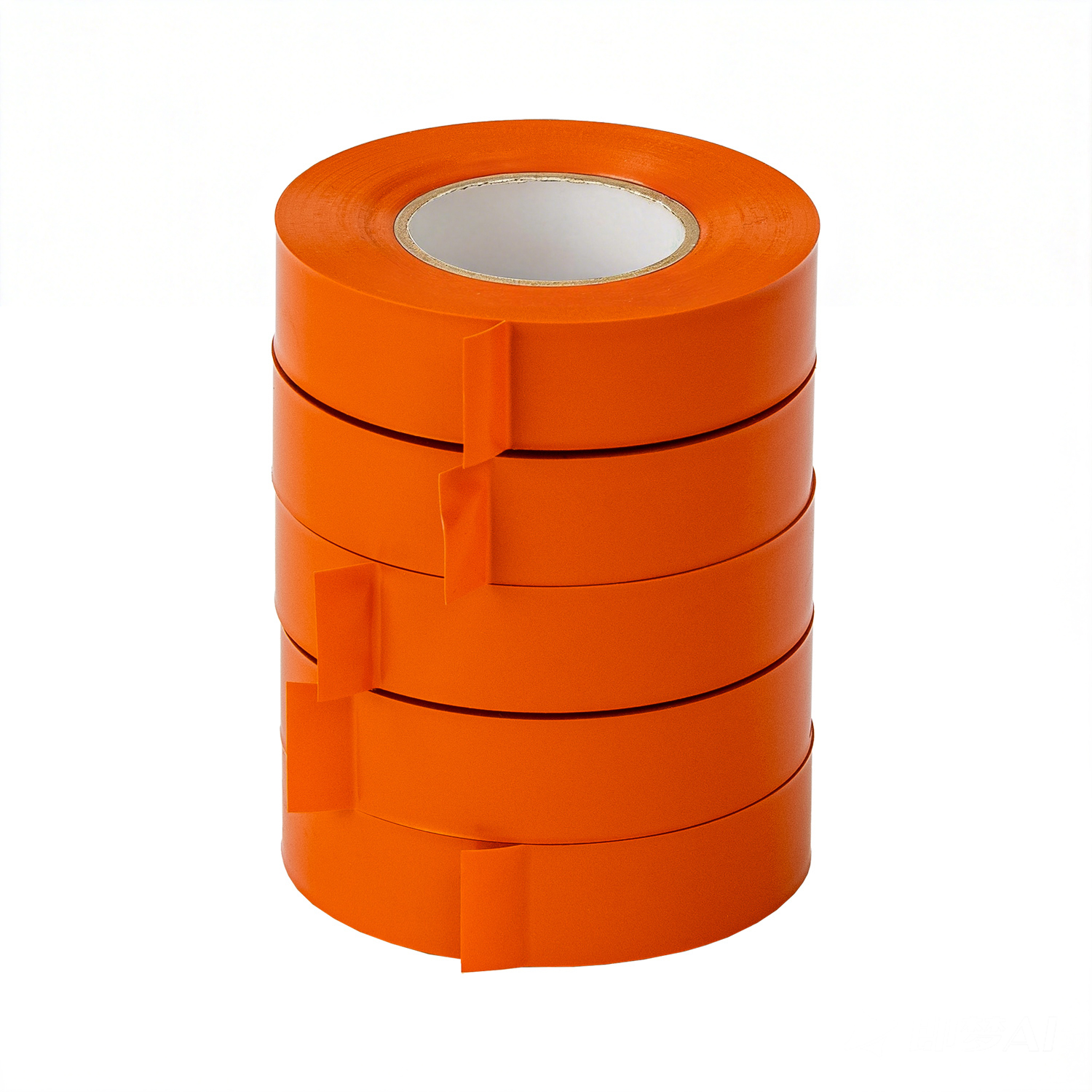
Categorizing the primary backing materials available for harness wrapping helps clarify which solutions best meet specific engineering requirements. The structural foundation of the tape determines its behavior on the factory floor and its performance inside the vehicle chassis.
The perpendicular arrangement of warp (longitudinal) and weft (transverse) threads provides a distinct mechanical advantage. This woven grid allows for immediate structural failure along a straight line when transverse force is applied. The tear energy naturally follows the path of least resistance between the weft threads, resulting in a sharp, clean break.
Traditional cotton cloth offers exceptional hand-tearability and superior flexibility. It dominates aftermarket automotive restoration projects. Technicians rely on cotton to refresh old wiring harnesses, as its matte finish and fabric texture perfectly replicate a clean, factory-new OEM look. Cotton conforms effortlessly to complex splices and sharp bends without flagging at the edges.
Modern woven PET (polyester) serves as the current industry standard for new vehicle production. It combines high mechanical strength and excellent abrasion resistance with the clean manual tearing characteristics required by assembly line operators. PET fibers resist automotive fluids, withstand high temperatures, and provide a robust physical barrier against sharp metal chassis components. This makes a woven hand tearable wire harness tape highly effective in demanding environments like the engine bay.
Unlike woven fabrics, fleece backings consist of randomly oriented, compressed fibers. Manufacturers typically use spunlace or needle-punched production methods to create this material. This non-woven structural composition responds differently to manual tearing. Instead of snapping along a precise grid line, the fibers separate and pull apart. While still tearable by hand, the resulting edge is often slightly fuzzy rather than perfectly straight.
The primary use case for fleece tape lies within the vehicle cabin. Its thick, soft structure excels at Noise, Vibration, and Harshness (NVH) dampening. Manufacturers wrap interior harnesses in fleece to prevent wires from rattling against plastic dashboard components or metal trim panels. The moderate tearability is an acceptable trade-off for its acoustic insulation properties.
Extruded vinyl and PVC films fundamentally resist tearing due to their polymer structure. PVC relies on elasticity. When an operator applies transverse shear force, the material stretches, necks down, and deforms significantly before finally breaking. This stretching problem slows down manual application, requires more physical effort, and leaves jagged, curled edges that look unprofessional and can compromise the environmental seal.
Despite the lack of easy hand-tearability, a general PVC harness tape remains necessary for specific applications. Engineering teams specify PVC for rigid conduit wrapping, areas requiring high moisture barriers, and exterior routing where dielectric strength and waterproofing take precedence over manual application speed.
Backing Material | Structural Matrix | Tear Edge Quality | Elongation at Break | Primary Application |
|---|---|---|---|---|
Woven PET Cloth | Warp and Weft Grid | Straight, clean snap | Low (10-20%) | Engine bay, high-abrasion zones |
Cotton Cloth | Warp and Weft Grid | Straight, clean snap | Low (5-15%) | Classic car restoration, interior |
Non-Woven Fleece | Compressed Fibers | Fuzzy, separated | Moderate (20-40%) | Cabin interior, NVH dampening |
Extruded PVC Film | Polymer Film | Jagged, stretched | High (150-250%) | Wet zones, conduit sealing |
Assessing how easy-tear backing structures perform against critical environmental stressors over the vehicle lifespan requires looking at specific evaluation dimensions. The tape must protect the wires long after the assembly process is complete. You cannot sacrifice long-term durability for short-term application speed.
A common concern is whether the woven structures that enable easy tearing compromise protection against sharp metal edges and constant vibration. In practice, high-quality woven tapes offer superior mechanical protection compared to standard films. The density of the weave dictates the abrasion resistance. A tighter weave with thicker PET threads provides a stronger barrier against friction.
When comparing abrasion ratings, such as those defined by ISO 6722, woven PET consistently outperforms non-woven fleece. The ISO 6722 standard uses a 0.45mm needle scrape test to determine how many cycles a tape can withstand before the needle contacts the wire insulation. PET cloth often achieves Class C or Class D abrasion resistance, making it suitable for routing near engine blocks or through tight chassis pass-throughs. Fleece typically provides Class A or B protection, which is adequate for static interior routing but insufficient for high-vibration zones.
ISO 6722 Abrasion Class | Requirement (Scrape Cycles) | Typical Tape Material | Application Zone |
|---|---|---|---|
Class A | 100 - 499 | Standard PVC, Thin Fleece | Static interior routing |
Class B | 500 - 999 | Thick Fleece, Cotton | Dashboard, door panels |
Class C | 1000 - 4999 | Standard Woven PET | Engine bay, chassis rails |
Class D | 5000 - 14999 | Heavy-Duty Woven PET | High-vibration engine blocks |
Engine bay requirements differ drastically from passenger compartment requirements. Tapes applied under the hood must withstand continuous radiant heat, fluid exposure, and extreme temperature cycling. Interior tapes face lower maximum temperatures but must not emit volatile organic compounds (VOCs) or odors that affect cabin air quality.
Backing materials degrade differently over time. Woven fabrics generally flex without cracking, maintaining their structural integrity even after years of thermal cycling. Conversely, vinyl and PVC tapes can stiffen, embrittle, and split under extreme temperature changes. The plasticizers in PVC migrate over time, causing the film to harden and eventually crack, exposing the wires beneath.
Backing conformability determines how well the tape navigates tight radii and complex harness branches. A stiff tape will lift or flag at the edges when wrapped around a sharp corner. Cloth backings excel in this area. The woven structure articulates and conforms to the uneven topography of a wire bundle, ensuring a tight, permanent wrap without edge lifting. This flexibility allows operators to wrap complex pigtails and branch breakouts quickly without fighting the material.
The backing structure does not act alone. The adhesive system must support the tearing process and accommodate the specific application technique. A mismatched adhesive can ruin the tearability of an otherwise excellent woven backing.
The viscosity and tack of the adhesive interact directly with the backing during a manual tear. Rubber-based adhesives offer high initial tack, grabbing the wires immediately. However, they can sometimes stretch and string during a tear if applied too thickly. Advanced acrylic adhesives provide a cleaner shear. They break sharply along with the fabric threads.
Evaluating acrylic adhesives reveals their superiority for high-temperature resistance and long-term stability on woven substrates. Acrylics do not dry out or turn into a gooey mess over time. They maintain their holding power even when exposed to engine oils and transmission fluids.
Many specialized cloth tapes utilize marginal or low-tack adhesives. These tapes rely on the tight mechanical wrap and the friction of the cloth layers rather than heavy glue. This approach prevents gooey residue from forming, which complicates future repairs or modifications to the loom.
Advanced loom-building techniques often involve layering. Technicians may wrap the loom first with a non-adhesive or dry tape to protect the wire insulation from chemical interaction. They follow this with an adhesive-backed tape to secure the bundle and provide the final outer layer of abrasion resistance.
Manufacturers calendar or coat woven backings during production to prevent the adhesive from bleeding through the weave. If the adhesive penetrates the fabric pores, it creates sticky edges on the roll. Sticky edges hinder clean tearing, cause the tape to bind during unspooling, and attract dust and debris on the assembly line. A properly calendared PET tape ensures the adhesive remains strictly on the bonding side.
You can identify poor adhesive compatibility on the line by watching for these specific defects:
Telescoping: The roll pushes out from the center like a telescope because the adhesive is too soft and acts as a lubricant between layers.
Oozing: Adhesive visibly squeezes out from the sides of the roll, transferring to the operator's hands.
Stringing: Long strands of adhesive stretch between the torn edge of the tape and the roll during termination.
Flagging: The end of the tape lifts away from the bundle hours after application because the adhesive lacks the shear strength to hold the woven backing down.
Translating material specifications into operational realities on the factory floor requires addressing the human element of manufacturing. The physical properties of the tape directly affect operator efficiency and safety.
Wrapping hundreds of harnesses per shift takes a cumulative physical toll on operators. The constant twisting, pulling, and tearing motions can lead to severe hand and wrist fatigue. Specifying a genuinely easy-to-tear tape significantly reduces the risk of repetitive strain injuries (RSI). It also eliminates the need for cutting tools, which removes a major safety hazard from the assembly line. Operators can maintain a steady rhythm without stopping to pick up and put down scissors.
Mitigating the risk of stringy tears or frayed edges is essential for quality control. Jagged edges require re-work, slowing down the line and increasing material waste. The tape must tear consistently every single time, regardless of which operator handles it.
Unspooling issues also affect consistency. The release force—the effort required to unwind the tape from the roll—must be perfectly balanced with the tear force. If the release force is too high, the tape may stretch or tear prematurely during unwinding. If it is too low, the roll may unspool uncontrollably when dropped or handled roughly.
Procurement teams must balance the higher unit cost of woven PET and fleece tapes against the labor savings generated by faster application speeds. The initial material cost is quickly offset by the reduction in application time, lower tool maintenance costs, and decreased operator fatigue.
Furthermore, easy-tear cloth tapes facilitate easier unwrapping and loom modification during aftermarket repairs. Hardened, fused PVC tape often requires technicians to carefully slice the bundle open with a razor blade, risking damage to the internal wire insulation. Cloth tapes can be unwrapped mechanically, preserving the integrity of the harness during diagnostic work.
Request material data sheets and physical sample rolls of woven PET, cotton, and fleece to match specific application zones in your facility.
Conduct time-studies and ergonomic evaluations on the actual assembly line using the sample rolls to measure the reduction in application time.
Perform thermal cycling and abrasion tests on wrapped harness sections to verify long-term durability against ISO 6722 standards.
Standardize tape selection across similar loom architectures to reduce inventory complexity and prevent misapplication on the floor.
A: The primary difference lies in the backing material. Hand-tearable tapes utilize woven cloth or non-woven fleece, allowing for immediate shear failure across the width. Standard electrical tape uses extruded PVC film, which relies on elasticity. PVC stretches and deforms under manual shear force, making it difficult to tear cleanly without scissors.
A: While it is physically possible to tear PVC tape by hand with significant force, it is not recommended for high-volume work. The PVC film tends to stretch, neck down, and deform before breaking. This leaves jagged, curled edges, compromises the seal, and significantly slows down production speed.
A: Yes. Woven PET backings are specifically engineered to tear easily across their width while offering exceptional longitudinal tensile strength. The dense woven grid provides excellent protection against sharp metal edges and constant vibration, often achieving high ISO 6722 abrasion ratings suitable for engine bays.
A: Cloth backings offer superior flexibility and conformability, allowing them to navigate complex harness branches without edge lifting. Unlike vinyl, which can stiffen, embrittle, and crack under severe thermal stress, cloth maintains its integrity. Furthermore, cloth eliminates the need for cutting tools during application.
A: While the backing dictates the physical tear, the adhesive must be formulated to shear cleanly alongside the substrate. If the adhesive is too thick or gooey, it will string and stretch during a tear. Low-tack and advanced acrylic options aid in clean tearing and prevent adhesive from bleeding through the fabric matrix.
A: Yes, non-woven fleece tape is generally hand tearable. However, because it consists of randomly oriented compressed fibers rather than a woven grid, it tears by fiber separation. This results in a slightly fuzzy edge rather than the sharp, straight snap characteristic of woven PET or cotton cloth.


