
close
Choose Your Site
Global
Social Media

 English
Views: 0 Author: Site Editor Publish Time: 2026-08-15 Origin: Site


Global trade presents a disproportionate risk when evaluating minor manufacturing components. A multi-thousand-dollar electrical assembly can face immediate seizure at European Union customs simply due to a few inches of non-compliant adhesive tape. Exporting electrical products demands strict adherence to international chemical regulations alongside accurate Harmonized Tariff Schedule (HTS) classification. Procurement and engineering teams frequently overlook secondary materials like insulation tape during the initial design phase. They focus heavily on primary components like microprocessors, relays, and power supplies. This oversight leads directly to unexpected European Chemicals Agency (ECHA) violations. It causes severe supply chain bottlenecks, triggers quarantine holds, and forces complete product recalls. Standardizing the Bill of Materials (BOM) with verified REACH Compliant Electrical Tape serves as a foundational risk-mitigation strategy for global market access. It ensures reliable electrical performance under international voltages while guaranteeing uninterrupted regulatory customs clearance.
Component-Level Scrutiny: Customs authorities and regulatory bodies evaluate products down to the adhesive and substrate level; non-compliant tape invalidates the entire product's compliance and export authorization.
SVHC Management: REACH compliance requires continuous monitoring of Substances of Very High Concern (SVHCs), which frequently update and directly impact tape formulations.
Dual-Compliance Necessity: Sourcing tape that meets both REACH and RoHS directives is critical for electrical exports, as the two frameworks regulate different aspects of chemical safety.
Operational Stress Testing: Compliant tape must not only pass chemical audits but also withstand international voltage variations and pre-shipment burn-in tests to ensure global readiness.
Documentation is Verification: A tape is only as compliant as its documentation. Valid Safety Data Sheets (SDS) and Certificates of Compliance (CoC) are mandatory for export clearance.
A successful export operation achieves zero customs holds and zero regulatory fines. It relies on accurate HTS classification and rapid market entry. Anything less compromises your international market position and drains operational capital. Secondary components frequently cause compliance failures during international testing. Wire harnesses, binding tapes, and insulation materials undergo rigorous scrutiny at the border. Testing laboratories and customs auditors routinely tear down imported products to analyze the chemical composition of every sub-component.
If the adhesive tape fails a chemical audit, the entire electrical unit fails. The compliance of the primary device cannot shield the non-compliance of its secondary materials. I have seen entire shipping containers of industrial control panels held at the Port of Rotterdam because the manufacturer used a generic, unverified PVC tape for internal wire bundling. The tape contained restricted phthalates. The customs agents flagged the HTS code, requested the material declarations, and immediately quarantined the shipment when the documentation fell short.
Customs authorities enforce a strict shared responsibility model across the global supply chain. Both the manufacturer and the importer of record must guarantee regulatory adherence. Failing to account for non-compliant sub-components under specific export codes triggers severe audits. Customs officials cross-reference HTS codes with required chemical declarations. Discrepancies immediately flag the shipment for physical inspection. When an auditor discovers restricted plasticizers in the wire harness tape, they halt the entire shipment. The resulting investigation often requires the manufacturer to provide full material disclosures for every single component in the assembly, a process that can take weeks. During this time, your products sit in a bonded warehouse, accumulating daily storage fees that quickly erode your profit margins.
Non-compliance results in devastating financial and reputational impacts. Shipments placed on customs hold incur daily quarantine and storage fees. Authorities may mandate complete product redesigns before allowing entry. This forces you to fly engineering teams overseas to rework the products in a bonded warehouse. In severe cases, manufacturers lose market access in the European Economic Area (EEA) entirely. The brand damage associated with environmental or safety violations takes years to repair. Competitors will quickly absorb your lost market share while your legal team fights customs appeals.
Many manufacturers confuse REACH and RoHS directives. They assume compliance with one framework automatically guarantees compliance with the other. This dangerous assumption leads directly to export seizures. You must differentiate between the two primary EU directives affecting electrical components to secure your supply chain.
REACH stands for Registration, Evaluation, Authorisation and Restriction of Chemicals. This broad regulation applies to all chemical substances manufactured or imported into the EU across all industries. REACH compliance requires continuous monitoring of Substances of Very High Concern (SVHCs). Legacy tape manufacturing often relies heavily on SVHCs to reduce production costs. Certain phthalates act as cheap plasticizers to make the PVC tape flexible. Specific heavy-metal compounds serve as inexpensive flame retardants. REACH strictly limits or bans these substances. If your tape contains SVHCs above the 0.1% weight threshold, you must declare it to the ECHA database. Failure to declare results in immediate customs rejection and severe fines.
RoHS stands for Restriction of Hazardous Substances. It applies specifically to electrical and electronic equipment. RoHS restricts ten specific hazardous materials. These include lead, cadmium, mercury, and hexavalent chromium. It also restricts specific flame retardants like PBBs and PBDEs, alongside four specific phthalates (DEHP, BBP, DBP, and DIBP). Sourcing a verified RoHS compliant PVC tape ensures these specific heavy metals and plasticizers remain absent from your internal wire harnesses and external cable jackets.
A tape must satisfy both REACH and RoHS to be viable for export. REACH covers a massive, constantly updating list of chemicals. RoHS targets a fixed list of substances specifically within electronics. You must independently verify compliance for both directives through rigorous supplier documentation and third-party laboratory testing. We frequently audit supplier facilities and find that while their tape passes RoHS heavy metal tests, it fails REACH SVHC limits due to undocumented plasticizers used in the adhesive backing. Procurement teams must demand separate, explicit declarations for both directives. Relying on a generic compliance stamp on a tape roll is a guaranteed path to an export failure.
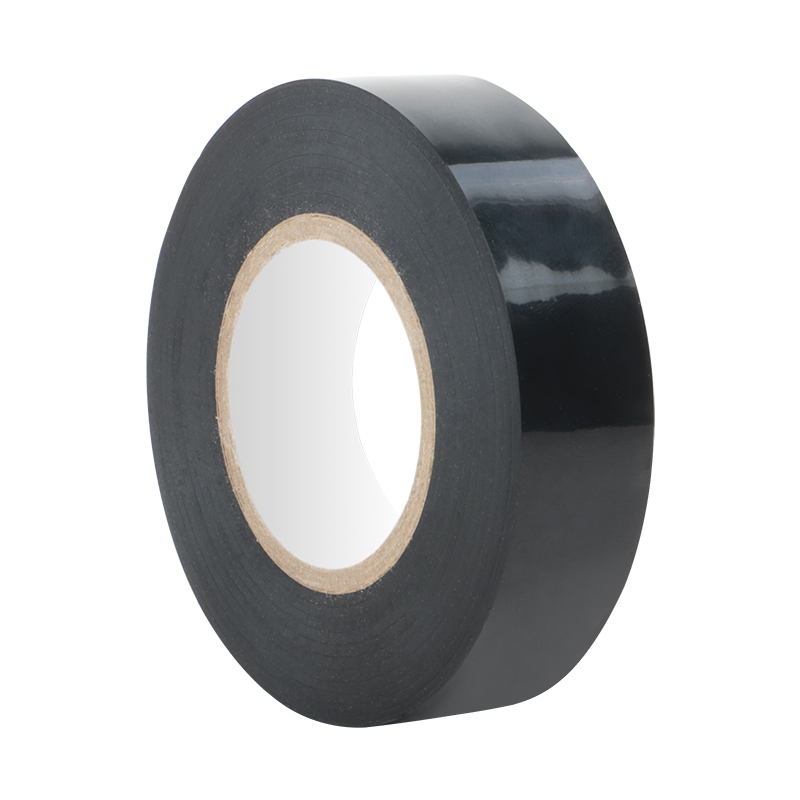
You must map specific tape characteristics directly to export success. Evaluating tape across multiple technical and chemical dimensions ensures your product survives both customs audits and international field operations. Chemical traceability ensures rapid customs clearance. You require full transparency of the chemical composition from the manufacturer. Import authorities demand precise material declarations before clearing the shipment. A compliant EU standard electrical insulation tape provides this traceability through updated Safety Data Sheets (SDS) and full material disclosure documents.
Dielectric strength and thermal resistance dictate safety certification success. Your product must pass international safety certifications like IEC standards and CE marking. The tape must maintain its electrical insulation properties under severe stress. It must achieve this without relying on restricted chemical stabilizers. The tape will face international voltages and frequencies that differ from domestic power grids. For example, industrial equipment exported to Europe operates on 400V/50Hz three-phase power. The insulation tape wrapping the motor leads must resist thermal degradation during extended operation in enclosed electrical panels. If the tape breaks down, it causes a phase-to-phase short circuit, potentially destroying the equipment and causing facility fires.
Adhesion and aging performance guarantee long-term product reliability. Export products face diverse climates during shipping and operation. They sit in unventilated shipping containers crossing oceans, where temperatures can exceed 60 degrees Celsius. They operate in high-humidity tropical environments and freezing industrial facilities. The adhesive must not degrade, dry out, or lose tackiness. If the tape flags or unwinds, it exposes live wires and creates severe fire hazards. We test tape adhesion by subjecting wrapped wire splices to thermal cycling chambers for 500 hours, alternating between -20°C and +85°C. Only tapes that maintain their bond pass our export qualification.
You must also evaluate the supplier’s scalability. The manufacturer must maintain chemical compliance across high-volume orders. Batch-to-batch chemical variations introduce massive export risk. A single non-compliant batch mixed into a large production run can trigger a massive product recall. We require our suppliers to provide lot-specific chemical analysis reports for every shipment.
Evaluation Feature | Legacy Non-Compliant Tape | Export-Grade Compliant Tape | Export Outcome Impact |
|---|---|---|---|
Chemical Composition | Contains restricted phthalates and heavy metals. | Free of SVHCs and RoHS restricted substances. | Determines if the product clears customs or faces immediate seizure. |
Dielectric Stabilizers | Relies on lead-based stabilizers for voltage resistance. | Uses advanced, non-toxic polymer stabilizers. | Ensures passing IEC and CE marking safety tests without chemical violations. |
Documentation Quality | Outdated or generic Safety Data Sheets (SDS). | Full material declarations and updated Certificates of Conformity. | Provides the necessary paperwork for rapid border clearance and audit defense. |
Batch Consistency | High variance in chemical makeup between production runs. | Strict ISO-certified quality control ensuring uniform compliance. | Prevents random audit failures and protects long-term brand reputation. |
Decision-makers must balance upfront material costs against severe export seizure risks. Verified REACH compliant electrical tape often carries a higher initial purchase price compared to non-compliant alternatives. You must frame this premium as a mandatory insurance policy. The slight increase in component cost prevents catastrophic export delays. Saving fractions of a cent on a roll of tape is illogical when it jeopardizes a massive international shipment worth hundreds of thousands of dollars.
Managing different tapes for domestic versus export products introduces severe logistical risks. It creates a high probability of cross-contamination on the assembly line. An operator might accidentally grab a non-compliant roll for an export build. This simple human error invalidates the compliance of the entire batch. Standardizing a single, globally compliant tape across all manufacturing lines eliminates this risk entirely. It simplifies inventory management, streamlines procurement processes, and reduces the administrative burden on your compliance team.
Global standardization also improves engineering efficiency. When engineers design a product using a single compliant tape, they do not need to re-qualify the adhesive for different regional markets. The product remains universally ready for export. This agility allows sales teams to enter new international markets rapidly without waiting for engineering to redesign the internal wire harnesses. We have seen companies lose major international contracts because their engineering teams needed six months to source, test, and validate a new compliant tape for a specific regional requirement. Standardizing your BOM upfront prevents this bottleneck.
Standardizing on a high-performance compliant tape reduces warranty claims. Non-compliant tapes often use inferior adhesives that dry out and fail after a few years in the field. Compliant tapes utilize advanced, stable polymer formulations that maintain their integrity over the product's entire lifecycle. This reliability directly protects your brand reputation in foreign markets where dispatching a service technician is logistically complex and highly expensive. The cost of one international warranty service call far exceeds the lifetime cost difference between compliant and non-compliant tape.
Integrating new compliant tapes into existing manufacturing processes requires rigorous validation. Preparing the product for its first export sale demands strict attention to documentation and testing protocols. Securing and verifying documentation is your first line of defense. You must obtain exact paperwork from your supplier before issuing a purchase order. This includes up-to-date Safety Data Sheets (SDS), full material declarations, and formal Declarations of Conformity (DoC). Customs officials will request these documents during an audit. If you cannot produce them immediately, your shipment will stall.
Managing the dynamic SVHC list requires proactive vigilance. The European Chemicals Agency updates the SVHC list typically twice a year. A tape that complies in January might fail in July if a new substance gets restricted. Require your suppliers to provide proactive alerts. They must issue updated compliance certificates whenever the SVHC candidate list changes. You cannot rely on passive compliance; you must actively monitor your supply chain. We recommend establishing a quarterly review meeting with your primary tape suppliers to discuss upcoming ECHA regulatory changes and their impact on current formulations.
Conduct pre-export operational testing to validate performance. We recommend performing 24-hour burn-in tests on the final assembly. This ensures the tape maintains its physical and electrical integrity under target market electrical loads. International voltages can stress insulation differently than domestic power grids. The tape must not melt, flag, or emit toxic fumes during these stress tests. We routinely place fully assembled control panels into environmental chambers, running them at maximum rated voltage and 85% humidity to verify the tape's performance before signing off on the export design.
Mandate independent third-party verification. Do not rely solely on supplier claims or internal marketing documents. Utilize independent testing laboratories like SGS, TÜV, or Intertek. They validate the chemical composition and electrical performance independently. Having a third-party lab report in your compliance file provides an ironclad defense during aggressive customs audits. It proves to regulatory bodies that you have exercised due diligence in your component sourcing, which can significantly reduce penalties even if a minor compliance issue arises.
Utilizing compliant electrical tape remains a mandatory requirement for legally and efficiently exporting electrical goods to regulated markets. Failing to secure compliant secondary materials exposes your entire operation to severe financial penalties, customs seizures, and brand degradation. Filter tape suppliers based on verifiable chemical documentation, dual REACH and RoHS compliance, and proven electrical performance standards under international testing conditions.
Audit your current Bill of Materials to identify all secondary adhesives, binding tapes, and insulation materials.
Request updated SVHC declarations and full material disclosures from your current tape suppliers immediately.
Initiate sample testing for compliant alternatives if your current documentation proves insufficient or outdated.
Implement a bi-annual review process to align your procurement standards with ECHA SVHC list updates.
A: No. They are separate directives. REACH covers the registration of chemicals and restricts Substances of Very High Concern (SVHCs) across all industries. RoHS restricts specific hazardous substances, like lead and certain flame retardants, strictly in electrical and electronic equipment. You must verify both independently.
A: Customs authorities evaluate the entire product. Non-compliant sub-components, like adhesive tape, invalidate the compliance of the entire HTS-classified product. If the tape fails a chemical audit, customs will seize the entire shipment, regardless of the primary device's compliance.
A: The European Chemicals Agency (ECHA) typically updates the SVHC candidate list twice a year. If a chemical used in your tape is added to the list, the tape becomes non-compliant. You must continuously monitor your suppliers for updated compliance certificates.
A: Customs authorities typically require a formal Declaration of Conformity (DoC), an up-to-date Safety Data Sheet (SDS), and full material declarations. Third-party laboratory testing reports from agencies like SGS or TÜV are also highly recommended to prove compliance during audits.
A: No. REACH and RoHS apply to the entire article, including all internal components. Even if the tape is buried deep inside a wire harness and never touched by the end-user, it must still fully comply with all chemical restrictions.
A: Non-compliant tapes often contain restricted plasticizers like DEHP, BBP, DBP, and DIBP phthalates used to make the PVC flexible. They may also contain heavy-metal-based flame retardants and stabilizers, including lead and cadmium, which are strictly banned.
A: Request full material declarations and updated DoCs from the supplier. Verify these claims through independent third-party laboratory testing. Additionally, conduct 24-hour burn-in testing at international voltages and audit the manufacturer's ISO quality control certifications.


