
close
Choose Your Site
Global
Social Media

 English

Views: 0 Author: Site Editor Publish Time: 2026-11-12 Origin: Site


Picture this scenario. You are balancing on a ladder in a cramped, poorly lit utility room. Your hands are wrestling with a heavy-gauge split bolt connector. Standard insulation methods like twist-on wire nuts or rigid heat shrink tubing completely fail when confronted with these awkward, bulky shapes. Leaving sharp metallic angles exposed is a recipe for catastrophic short circuits. Yet, achieving a tight seal feels nearly impossible.
Specialized vinyl polymers solve this exact issue. High-quality adhesive films stretch and mold to virtually any geometry, tackling the complex problem of insulating uneven splices. In this comprehensive guide, we will explore the underlying material science. We will walk through professional wrapping techniques and break down how to secure irregular joints safely and permanently.
Unmatched Conformability: Premium polyvinyl chloride materials stretch and mold around sharp edges and bulky hardware, creating a skin-tight, moisture-resistant barrier.
Crucial Dielectric Strength: Proper wrapping technique establishes a robust shield against electrical current, preventing dangerous arcing in complex connections.
Technique Dictates Success: Utilizing the standard half-lap method with precise tension control ensures the adhesive bonds permanently without unspooling over time.
Safety and Compliance: Applying specialized fire-resistant tapes adds a critical layer of protection to high-load systems, satisfying stringent modern building codes.
Streamlined Organization: Using colored markers for phase identification in multi-wire splices guarantees that future maintenance remains efficient and hazard-free.
In the realm of electrical wiring, an irregular joint is any connection that deviates from a smooth, uniform cylindrical shape. Technicians frequently encounter these in the field. They appear as split bolt connectors utilized for heavy-gauge wires, bulky motor lead connections, complex Y-splices, and heavy-duty grounding lugs. These connections inherently feature sharp brass or copper corners, protruding nuts, and abrupt diameter changes. This jagged topography severely complicates the application of a uniform insulation layer. It presents an ongoing headache for maintenance personnel.
Ignoring the unique geometry of an uneven splice invites significant operational hazards. Sharp metallic burrs can easily slice through thin or hastily applied insulation. This leaves live conductors dangerously exposed. Once compromised, electrical arcing becomes a severe threat. Current can literally jump through the air to a nearby grounded surface, igniting surrounding materials. Beyond immediate fire risks, inadequate sealing permits ambient moisture and industrial contaminants to seep into the joint. This insidious ingress accelerates galvanic corrosion, drives up electrical resistance, and inevitably triggers complete circuit failure.
Standard techniques work flawlessly for straight inline runs. However, they buckle under the pressure of bulky splices. Rigid twist-on wire nuts are cast in predetermined dimensions and simply cannot swallow the sprawling shape of a T-tap or split bolt. Heat shrink tubing faces a different limitation regarding its shrink ratio. If a tube is wide enough to slide over a massive connector nut, it will never shrink tightly enough to grip the much smaller wires exiting the joint. Consequently, dangerous voids remain where condensation can silently pool.
Modern electrical infrastructure is undergoing a massive transformation. With the rapid adoption of smart building technologies and high-density industrial automation, junction boxes are handling heavier electrical loads than ever before. This increased power density translates directly to higher thermal stress on every single connection.
Consequently, regulatory bodies are tightening safety codes. Outdated insulation practices are no longer acceptable. The industry is seeing a sharp shift away from generic insulating materials toward highly engineered polymer composites. Facility managers and electrical contractors now demand materials that offer superior dielectric strength alongside high thermal stability. This trend underscores why selecting the correct specification of vinyl tape is no longer just a best practice, but a strict compliance requirement for modern builds.
Polyvinyl Chloride serves as the chemical backbone for modern electrical insulation. In its unrefined state, this polymer is remarkably rigid. To adapt it for electrical applications, manufacturers infuse the matrix with specific plasticizers. This transforms the stiff plastic into a highly resilient, flexible film. This robust backing is then married to a specialized, pressure-sensitive rubber mastic adhesive. Together, they form a composite material engineered specifically to survive the mechanical and thermal rigors of commercial wiring.
The true genius of this material lies in its physical elasticity. When you stretch a standard 7-mil PVC electrical tape over the jagged peak of a connector, its polymer molecules align and store mechanical energy. Once pressed into place, the film constantly attempts to retract to its original shape. This elastic memory exerts a continuous, compressive stranglehold around the joint. The resulting skin-tight seal maps flawlessly to the underlying metal, aggressively squeezing out microscopic air gaps that could otherwise harbor moisture.
Physical flexibility means little if the material cannot contain voltage. Dielectric strength is the metric used to gauge an insulator capacity to withstand electrical stress before breaking down. Industry-grade tapes are chemically formulated to deliver a high dielectric breakdown threshold. They are commonly rated to hold back up to 600 volts per single layer. The dense molecular structure of the vinyl acts as an impenetrable wall. It traps the flow of electrons within the conductive copper, even when stretched taut over a sharp metallic corner.
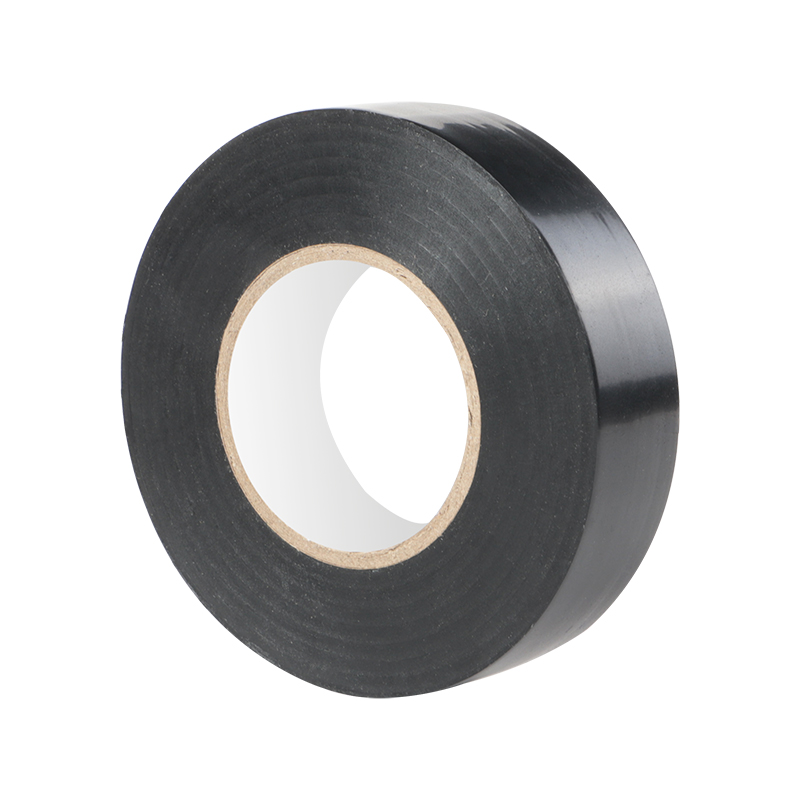
The finest insulation material is practically useless if applied incorrectly. Adopting a systematic, professional wrapping approach ensures a secure barrier that will outlast the surrounding infrastructure.
Preparation dictates adhesion. Before exposing any adhesive, take a moment to assess the connection. Use a fine metal file to gently grind down any aggressive burrs or jagged wire ends left behind by your cutting tools. Following this, thoroughly wipe down the entire splice with a clean, dry rag or an approved solvent. Cutting oils, drywall dust, and greasy fingerprints are the natural enemies of rubber-based adhesives. They inevitably cause premature peeling if not removed.
When tackling severely irregular hardware, such as a massive split bolt, laying down a foundation layer is a critical best practice. Rubber mastic splicing tape functions much like moldable clay. By kneading and wrapping a layer of mastic over the hardware, you effectively fill deep voids and soften harsh angles. This creates a smooth, rounded terrain for your final vinyl jacket. It virtually eliminates the risk of sharp metal puncturing the primary defense layer.
The undisputed industry standard for establishing a dielectric barrier is the half-lap method. To execute this properly, follow these field-tested steps.
Anchor the tape firmly on the original wire jacket, starting roughly one inch before the exposed splice.
Angle the roll slightly to establish a spiraling trajectory.
As you wrap, ensure each new rotation overlaps the previous layer by exactly fifty percent.
Continue this overlapping pattern well past the bulky hardware, terminating on the original insulation on the far side.
By enforcing a strict overlap, you inadvertently guarantee that every single millimeter of the joint is shielded by at least two distinct layers of vinyl in a single pass.
Mastering tension control separates amateur work from professional installations. As you navigate the tape over the bulkiest regions of the hardware, stretch the film to roughly five-eighths of its resting width. This deliberate stretching awakens the elastic memory, forcing the material into the deepest crevices. However, this high-tension approach must be abandoned as you finish the wrap.
To finalize the barrier, always cut the tape with shears or a blade rather than stretching and tearing it with your hands. Tearing warps the terminal segment unpredictably. Lay down the final inch of material with absolutely zero tension. Press it firmly into the underlying layers with your thumb. This simple habit prevents flagging, which is the frustrating tendency of tape ends to lift and unspool over time.
Bridging awkward gaps without trapping air is the true test of an insulator. Trapped air pockets within a splice are microscopic ticking time bombs. First, they act as incubators for condensation, breeding internal corrosion. Second, in higher voltage scenarios, these pockets can ionize. This triggers corona discharge that slowly eats away at the polymer from the inside out. Exceptional conformability guarantees complete, intimate surface contact.
The ambient environment relentlessly attacks polymer structures. A premium vinyl tape is specifically engineered to retain its suppleness even in sub-zero conditions. Cheaper plastics will freeze, turn brittle, and snap mid-wrap. Conversely, when trapped inside a baking industrial enclosure, the adhesive must hold its ground. High-grade formulations refuse to melt, ooze, or slide off the joint when subjected to heavy thermal loads.
Irregular splices rarely live in isolation. They are usually crammed into dense junction boxes alongside dozens of other circuits. As wires shift, vibrate, and rub against each other, the insulation endures constant physical friction. The durable outer skin of a quality vinyl wrap functions as rugged armor. It shields the delicate inner conductors from neighboring wire ends and the unforgiving steel edges of the enclosure itself.
Circuit junctions are inherently the most vulnerable bottlenecks in any electrical system. Should an uneven splice be inadequately torqued, or loosen due to thermal cycling, localized electrical resistance spikes. According to the foundational principles of Ohm law, this resistance breeds heat. Left unchecked, a poorly insulated joint can reach ignition temperatures. This sparks devastating fires within hidden wall cavities or critical control panels.
Stricter fire safety protocols demand self-extinguishing insulation. To meet this need, manufacturers embed specific chemical suppressants into the polymer matrix. When exposed to extreme heat or an open arc, a durable flame retardant PVC electrical tape undergoes a localized chemical reaction. It releases compounds that actively starve the surrounding area of oxygen. Once the short-circuiting wire stops generating heat, the tape immediately self-extinguishes. This halts the fire progression dead in its tracks.
Given the catastrophic potential of electrical fires, regulatory bodies maintain zero tolerance for substandard materials. Products deployed in commercial and residential builds must pass rigorous testing by organizations like Underwriters Laboratories or the Canadian Standards Association. Utilizing certified flame-resistant materials is a mandatory legal baseline that protects both the facility and its occupants.
Step onto any industrial job site, and you will quickly realize that irregular joints are rarely simple two-wire affairs. A single oversized junction box might house a chaotic web of active phases, neutral returns, and equipment grounds. These all converge into massive, taped lumps. If every single splice is wrapped in identical black vinyl, the enclosure transforms into a dangerous, unnavigable maze.
To cut through this chaos, technicians rely heavily on visual management. A premium PVC electrical color coding tape performs the exact same insulating function as its black counterpart but provides instant visual data. By wrapping a distinct colored band around the conductor just before it enters the splice, the wire purpose is immediately broadcasted to anyone opening the panel.
Standard phase identification typically follows strict rules. Black, red, and blue are universally utilized to mark active, live phases in low-voltage systems. White or gray is strictly designated for neutral return conductors. Green is exclusively reserved for critical equipment grounding paths.
Meticulous color-coding transcends basic organization. It is a profound safety investment for the future. When a different technician arrives to troubleshoot a fault a decade later, these bright visual cues eliminate hazardous guesswork. They prevent fatal mistakes, such as inadvertently bridging a live phase to a grounded chassis. Premium colored tapes are formulated with UV-resistant pigments to ensure these vital warnings remain legible and vibrant for years.
Even seasoned electricians can fall victim to subtle bad habits. When navigating the tricky topography of a split bolt or motor lead, avoiding these frequent pitfalls is essential for maintaining circuit integrity.
The single most ubiquitous error in the trade is stretching the tape all the way to the bitter end. Because the material possesses elastic memory, a tightly stretched final inch will wage a constant war against its own adhesive. Eventually, the elasticity wins, causing the tail to lift and peel backward. Always apply the final segment with zero tension to prevent this flagging effect.
A single pass of tape is woefully inadequate for a jagged piece of hardware. The sharp threads of a brass connector exert immense point-pressure on the vinyl film. A reliable rule of thumb dictates that the newly applied insulation should be built up until it is at least as thick as the original wire jacket. For highly uneven connectors, this necessitates a minimum of two complete, half-lapped passes. This effectively yields four distinct layers of puncture resistance.
Adhesive bonds occur at the microscopic level. If your substrate is coated in wire-pulling lube, anti-oxidant paste, or construction dust, the tape is merely sticking to the debris, not the joint. This guarantees internal air pockets and rapid unraveling. Taking ten seconds to wipe the joint with a clean rag is non-negotiable.
Substituting professional electrical insulation with generic masking, duct, or packaging tape is a severe code violation. These household tapes lack the chemical structure to block voltage, meaning current can bleed right through them. Furthermore, their inferior adhesives bake and turn to powder under normal electrical thermal loads. Always demand appropriately listed materials.
Matching the specific tape to the environmental and mechanical demands of the splice ensures long-term reliability. Not all rolls are created equal. Understanding their technical nuances is vital for a successful installation.
Insulation thickness is quantified in mils, which means thousandths of an inch. A standard professional roll clocks in at 7 mils. This strikes an ideal balance between flexibility and dielectric strength for everyday splices. However, when confronting exceptionally hostile geometry, upgrading to a heavy-duty 8.5-mil or 10-mil variant is highly advisable. The thicker armor sacrifices a fraction of stretchability for a massive gain in puncture resistance.
The longevity of your wrap hinges entirely on the adhesive chemistry. Premium tapes favor aggressive, rubber-based mastic compounds over standard acrylics. Rubber-based adhesives remain highly viscous, allowing them to seep into the microscopic pores of the wire jacket and the hardware. This dynamic flexibility ensures the bond survives the daily expansion and contraction of the metal without cracking or sliding.
Insulation Category | Technical Specifications | Best Field Application |
|---|---|---|
Standard Grade | 7-mil thickness, 600V dielectric strength, high elasticity. | General indoor wiring, minor irregular joints, pigtail splices. |
Heavy-Duty Grade | 8.5 to 10-mil thickness, extreme puncture resistance. | Large split bolts, motor leads, abrasive grounding lugs. |
Flame Retardant | Self-extinguishing matrix, high thermal stability limits. | Commercial panels, high-load industrial junction boxes. |
Color Coding | UV-resistant pigments, vibrant long-lasting visibility. | Phase identification in complex multi-wire enclosures. |
Irregular wire joints do not have to be a liability in your electrical system. By leveraging the unique elasticity and robust dielectric strength of premium vinyl films, you can transform a hazardous, exposed splice into a secure, weather-tight connection. Mastering the half-lap wrapping technique and respecting tension control guarantees that your insulation will neither puncture nor unravel over time.
Before you tackle your next wiring project, audit your toolkit. Ensure you are equipped with properly rated, high-quality materials to protect your infrastructure, satisfy building codes, and prioritize absolute safety. For a comprehensive selection of professional-grade insulation solutions tailored to your specific project needs, explore the high-performance options available at ipvctape.com to secure your connections permanently.
Absolutely not. Utilizing household tapes on electrical splices is incredibly dangerous. These generic materials completely lack the dielectric strength required to contain voltage, creating an immediate shock hazard. Furthermore, their adhesives degrade rapidly under heat, and the materials themselves are highly flammable.
For a standard uneven splice, industry best practice mandates applying at least two half-lapped passes. Because the half-lap technique overlaps the tape by fifty percent on every rotation, two complete passes actually generate four solid layers of insulation. For excessively sharp connections, continue wrapping until the new insulation profile is flush with the original wire jacket.
While high-grade vinyl tape aggressively repels ambient humidity, condensation, and minor splashes, it is not engineered to be entirely waterproof when fully submerged. Continuous hydrostatic pressure can eventually force water through the overlapping seams. For wet-environment applications, the tape must be paired with a moldable rubber mastic tape.
This common issue is known as flagging. It is almost always the result of over-stretching the final rotation of tape. The vinyl elastic memory constantly pulls backward against the adhesive. If the end is stretched tight, it will eventually lift. To prevent flagging, always apply the final inch of tape with zero tension and press it firmly into place.
While both variants offer excellent conformability and voltage protection, flame retardant tapes are chemically enhanced for superior fire safety. If a splice overheats due to high resistance, standard tape may eventually ignite. In stark contrast, flame retardant tape releases oxygen-displacing compounds that cause it to self-extinguish immediately once the primary heat source is removed.
The lifespan heavily depends on the tape quality and environmental exposure. Premium tapes engineered with UV-resistant plasticizers and heavy-duty adhesives can easily last five to ten years outdoors without cracking. Cheaper alternatives will often dry out, become brittle, and unravel within a single year of harsh sun and temperature fluctuations.
Yes, this is an excellent practice for maximum durability. While heat shrink cannot properly seal the awkward geometry of a split bolt on its own, sliding a piece of heat shrink over a properly taped joint adds a rugged, abrasion-resistant outer jacket. The tape provides the primary dielectric and moisture seal, while the tubing acts as mechanical armor.


