
close
Choose Your Site
Global
Social Media

 English

Views: 0 Author: Site Editor Publish Time: 2026-11-15 Origin: Site


Opening the hood of any modern vehicle reveals a brutal reality. The engine compartment acts as a torture chamber for electrical wiring. Radiant heat, aggressive chemical spills, and relentless mechanical vibration conspire to destroy standard electrical tape within weeks. Using incorrect materials inevitably triggers a cascade of failures. What starts as a sticky, unraveled mess quickly escalates into dangerous electrical shorts or catastrophic engine failure.
This guide equips mechanics, automotive enthusiasts, and procurement managers with the technical knowledge to select wiring protection correctly. We will explore the specific engineering properties of specialized materials to help you safeguard critical electrical systems against the harshest under-hood conditions.
Temperature is King: Engine bays demand tapes rated for at least 105°C to 125°C. Standard household electrical tape is completely obsolete here.
Material Matters: Polyvinyl chloride formulations offer exceptional moisture and chemical resistance. Cloth or PET fleece tapes are optimized for abrasion resistance and noise dampening.
Fluid Resistance: Professional-grade tapes withstand prolonged exposure to motor oil, ethylene glycol, and brake fluid without compromising structural integrity.
Application Technique: Premium materials fail prematurely if applied improperly. Mastering the half-overlap technique and rigorous surface preparation is non-negotiable.
To fully grasp why specialized wiring protection is mandatory, one must first analyze the specific environmental stressors present under the hood. The engine compartment is far from a static environment. Rather, it is a dynamic, highly volatile space that actively degrades standard polymers.
Picture a vehicle operating during a scorching summer afternoon. The ambient heat feels oppressive, but once the block reaches optimal capacity, the under-hood climate transforms drastically. Engine bays transition from freezing winter temperatures to operating conditions well over 100°C in mere minutes. Areas adjacent to the exhaust manifold or turbocharger housing routinely experience radiant heat exceeding 150°C. Standard tapes suffer immediate plasticizer evaporation under these conditions. The backing cracks, and the adhesive liquefies.
Furthermore, wiring harnesses face constant threats from aggressive chemicals. Motor oil, synthetic lubricants, coolant, brake fluid, and unburned hydrocarbons actively corrode basic rubber adhesives. When standard tape absorbs these fluids, its chemical structure breaks down, resulting in a total loss of tackiness. Consequently, the tape slides right off the wire loom. To combat this, a high-quality insulating automotive harness tape is engineered with a non-porous backing. This acts as an impermeable physical barrier, repelling fluids and preventing galvanic corrosion of the sensitive copper wiring underneath.
Engines also generate continuous, high-frequency vibrations that transfer directly to the harnesses. This movement causes wires to rub relentlessly against metal brackets and plastic covers. Over time, this constant friction acts exactly like sandpaper. Without durable protection, it easily wears through wire insulation, eventually exposing bare copper and triggering parasitic draws.
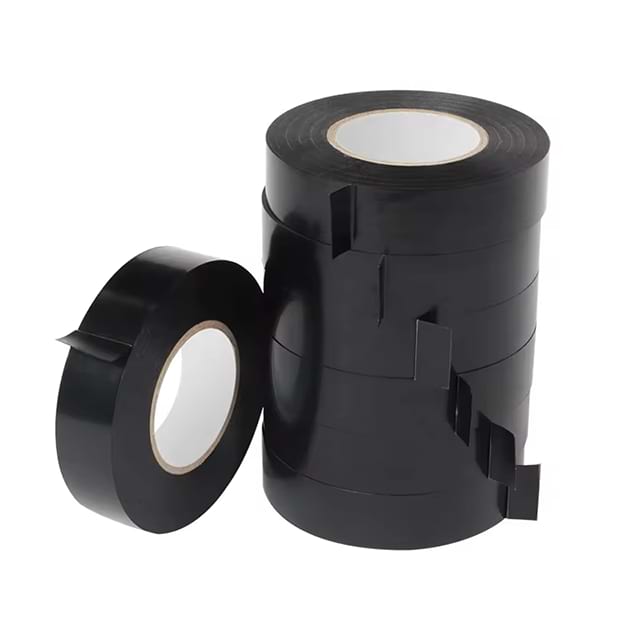
When evaluating specification sheets, procurement managers and technicians must look beyond basic dimensions. A dependable product must possess several critical technical qualities to ensure long-term performance in the field.
Automotive tapes are strictly categorized by international heat class ratings. These define the maximum continuous operating temperature the material can endure for extended periods—typically 3,000 hours—without degrading. Selecting a tape that meets at least Class T2 105°C or Class T3 125°C is an absolute necessity for standard engine compartment routing. This ensures the material will not become brittle when parked over hot asphalt.
Flagging is an industry term describing the frustrating phenomenon where the end of a wrapped tape peels up and unwraps itself. This remains a notorious failure point in high-heat environments. To counteract this, a premium automotive wire wrap tape utilizes advanced cross-linked acrylic or engineered rubber-based adhesives. These specialized formulations possess immense shear strength, allowing them to resist the sliding forces generated by thermal expansion.
Because engine bays are inherently wet environments prone to minor leaks, the tape must serve as a hermetic seal. Tapes manufactured with a dense, non-porous polymer backing provide the highest level of fluid defense. This prevents capillary action, where fluids are actively drawn into the wire bundle through microscopic gaps.
Wiring harnesses rarely run straight. They navigate complex junctions, sharp bends, and bulky connectors. Therefore, the tape must possess a high elongation at break percentage. This elasticity allows the technician to stretch and conform the tape tightly around irregular shapes without tearing.
Electrical shorts generate intense, localized heat and sparks. If a wire overheats, the surrounding insulation must never act as an accelerant. Automotive-grade tapes are rigorously formulated to meet strict flame retardancy standards like FMVSS 302. They are inherently self-extinguishing. If ignited, they cease burning immediately once the primary heat source is removed.
Analyzing current industry trajectories reveals that automotive manufacturing is experiencing a massive paradigm shift. Driven by the proliferation of turbocharging, hybrid powertrains, and the complex thermal management systems required for modern electric vehicles, under-hood ambient temperatures are steadily climbing. Packaging constraints mean wire harnesses are routed closer to major heat sources than ever before.
Specifically, industry analysts note a surging demand for advanced polymer-based wire protection that can reliably exceed legacy thermal standards. The transition toward high-density engine bays demands materials that maintain strict fluid resistance and dielectric strength without adding unnecessary bulk. This trend is pushing advanced high-temperature PVC formulations to the forefront of under-hood applications, as manufacturers seek cost-effective, highly reliable barriers against both thermal degradation and chemical exposure.
The automotive market is heavily divided between two dominant materials: High Temp PVC and PET Fleece or Cloth. Understanding the empirical differences between them is paramount for making an informed, data-driven selection.
It is crucial to distinguish between cheap hardware store electrical tape and professional-grade materials. Engineered high temp PVC wire harness tape is manufactured with heat-stabilized polymeric plasticizers and a robust backing. From a practical standpoint, its non-porous nature makes it an exceptional, waterproof barrier against oil and coolant. It offers superior dielectric strength to prevent electrical arcing, conforms easily to complex splices, and creates a highly compressed, low-profile wire bundle.
In contrast, cloth tapes are woven from polyester fibers and backed with high-tack adhesives. Their standout feature is unparalleled abrasion resistance. The woven structure provides a formidable defense against sharp metal edges. Additionally, fleece tapes excel in noise dampening, preventing wire harnesses from rattling against plastic interior panels.
Neither material is universally superior; efficacy depends entirely on placement. For areas exposed to weather, water, or potential fluid leaks, PVC is the definitive choice due to its waterproof barrier. If a harness is routed through a sharp metal bulkhead where fluid exposure is minimal, the mechanical durability of PET cloth tape makes it the optimal localized solution.
Feature | High Temp PVC Tape | PET Cloth / Fleece Tape |
|---|---|---|
Temperature Rating | 105°C to 125°C Class T2/T3 | 105°C to 150°C+ |
Fluid Resistance | Excellent Non-porous, repels oil/coolant | Poor to Moderate Absorbs fluids |
Abrasion Resistance | Moderate | Exceptional |
Flexibility & Profile | High stretch, creates low-profile bundles | Less stretch, adds bulk to harnesses |
Best Application Zone | Engine bay, exposed weather areas, splices | Cabin interiors, sharp metal bulkheads |
Purchasing decisions should rely on environmental assessments rather than guesswork. Follow this practical framework to evaluate your exact requirements.
Begin by mapping the exact routing of the wire harness. Wiring running along the firewall or near the fuse box generally requires a standard 105°C rating. However, if the loom routes directly over the valve cover or adjacent to the radiator, specifying a tape rated for 125°C is mandatory. Always select a thermal rating that comfortably exceeds the maximum expected ambient temperature of that specific zone.
Next, determine the primary physical threat to the harness. If the wiring is securely suspended with zip-ties but exposed to the elements behind the radiator grille, prioritize a tape with maximum dielectric strength and fluid resistance. Conversely, if the harness passes through a tight, un-grommeted metal hole, abrasion resistance must take precedence.
For professional repairs and manufacturing, always verify the technical specification sheets. Look for compliance with RoHS and REACH directives to ensure the product is free from hazardous heavy metals. Checking for OEM-equivalent specifications guarantees the tape has undergone rigorous laboratory testing for automotive longevity.
Even premium materials will fail if misapplied. Many catastrophic wiring failures stem from a few easily avoidable errors during the installation process.
Using standard household electrical tape remains the most frequent and detrimental error made by DIY enthusiasts. Within weeks of engine operation, severe thermal cycling causes the basic adhesive to liquefy. This results in the infamous gooey mess phenomenon. The tape unravels, leaving a sticky residue across the engine bay while exposing delicate copper wires to moisture.
Furthermore, adhesives require a pristine surface to form a mechanical and chemical bond. Wrapping new tape over wires coated in decades of baked-on engine grease guarantees adhesive failure. The contaminants act as a physical barrier. Always wipe down the wires thoroughly with a fast-drying solvent like isopropyl alcohol, allowing them to dry completely before wrapping.
Because PVC materials are highly elastic, users often pull the tape as tightly as possible to create a compact bundle. However, PVC possesses elastic memory. When exposed to engine heat, over-stretched tape aggressively attempts to shrink back to its original length. This shrinking force easily overcomes the adhesive, causing the overlapping layers to separate and the ends to flag.
Mastering the application technique is just as critical as material selection. Adopting industry-standard operating procedures ensures your wiring harnesses remain secure.
The gold standard for harness wrapping is the half-overlap method. As you wrap the tape spirally around the wire bundle, angle the roll so that each new revolution covers exactly fifty percent of the previous pass. This technique creates a continuous, double-layered barrier across the entire harness. It maximizes dielectric strength while creating a shingled effect that effectively sheds water.
Not every harness requires full, unbroken coverage. Continuous wrapping is ideal for wires exposed directly to the elements. However, for wire bundles routed inside protective corrugated plastic split loom, continuous wrapping adds unnecessary weight and stiffness. Instead, utilize spot taping. Wrap a few tight layers every four to six inches. This keeps individual wires organized and maintains maximum flexibility for complex routing.
To permanently solve the issue of tape flagging at the ends of a run, professional auto electricians employ the no-tension finish. When reaching the end of the wire bundle, apply the final two inches of tape with absolutely zero stretch. Simply lay the tape flat against the harness and press it down firmly with your thumb. Removing the mechanical tension from the final wrap eliminates the elastic memory that causes peeling.
Selecting the correct tape is the first and most crucial line of defense against electrical failures. By matching specific material properties to the unique environmental demands of your engine bay, you ensure long-lasting reliability. High temperature PVC tapes offer unparalleled fluid resistance and reliable insulation for complex automotive wiring, making them an indispensable tool for both minor repairs and major overhauls.
Do not compromise your vehicle's electrical integrity with subpar materials. Take the time to evaluate your current wiring projects carefully. For professional-grade solutions engineered to withstand extreme under-hood conditions, explore the comprehensive range of specialized automotive tapes at ipvctape.com to safeguard your electrical systems today.
No, regular electrical tape should never be used in an engine compartment. Standard household electrical tape is typically only rated to withstand temperatures up to 80°C. An active engine bay routinely experiences ambient temperatures well above this threshold. Under these harsh conditions, standard tape will quickly melt, the adhesive will break down into a sticky residue, and the backing will unravel, leaving critical wires exposed.
High temp PVC tape explicitly designed for automotive engineering applications is usually rated to withstand continuous operating temperatures between 105°C and 125°C. These ratings correspond to strict automotive industry heat classes like Class T2 and T3. This ensures the tape maintains its structural integrity, flexibility, and adhesive bond even during extreme thermal cycling.
Yes, PVC-based harness tapes provide exceptional protection against a wide variety of automotive fluids. Because polyvinyl chloride is a non-porous material, it creates a highly effective, impermeable barrier against synthetic motor oil, ethylene glycol coolant, brake fluid, and steering grease. Corrosive fluids simply bead up and roll off the taped harness.
For general engine bay wiring routed along the firewall or fenders, a minimum rating of 105°C is required. However, for wire harnesses routed directly over the engine block, near the radiator, or adjacent to exhaust components, you must specify a tape rated for at least 125°C to prevent thermal degradation and adhesive failure.
Always clean the wires with a fast-drying solvent first to remove grease and dirt. Use the half-overlap technique, angling the tape so each pass covers fifty percent of the previous layer. Apply moderate tension while wrapping, but execute a no-tension finish for the final two inches by laying the tape flat without stretching. This prevents the ends from peeling up under engine heat.


