
close
Choose Your Site
Global
Social Media

 English
Views: 0 Author: Site Editor Publish Time: 2026-08-12 Origin: Site


In professional electrical work, how you physically apply tape matters just as much as its chemical makeup. A tape that snaps under standard installation tension is useless on the job site. Procurement teams and engineers frequently evaluate insulation materials based strictly on dielectric strength, completely ignoring mechanical properties. This oversight causes major headaches in the field. Poor stretch characteristics lead to constant breakage during wrapping, wasted material, and extended labor times. Worse, it causes delayed failures like flagging, where the tape unravels and exposes live conductors. Understanding the mechanics of stretch gives you a reliable framework for evaluating materials. By analyzing elongation at break, tensile strength, elastic memory, and their direct relationship with adhesion, you can specify the right materials. Proper specification of General Purpose Electrical Tape ensures long-term insulation integrity and keeps your installations safe.
Stretch Requires Memory: High elongation is only valuable if the tape possesses elastic memory (the ability to return to its original form), which provides the continuous compressive force necessary for a secure, moisture-tight seal.
The Adhesion Balance: A tape's stretch and elastic memory must be perfectly balanced with its adhesion strength; otherwise, the tape's natural urge to retract will overpower the adhesive, causing it to peel or flag.
Material Construction Dictates Performance: Lower-grade monomeric tapes often stretch but fail to recover, whereas higher-grade polymeric tapes maintain structural integrity and flexibility under tension.
Over-Stretching Creates Vulnerabilities: Exceeding a tape's optimal stretch capacity physically thins the backing, which can reduce its dielectric strength and flame-retardant properties.
Application Efficiency Impacts Labor Costs: Tapes with optimized tensile strength and elongation reduce breakage during fast, high-tension wrapping, directly lowering installation time and material waste.
Elongation at break serves as the primary metric for evaluating how much physical distortion a tape can handle. Manufacturers express this value as a percentage of the original length. When a specification sheet lists an elongation of 200%, it means a one-inch strip can stretch to three inches before the PVC backing suffers catastrophic structural failure. In practical field applications, electricians rarely push tape to its absolute breaking point. However, a high maximum elongation indicates that the tape will comfortably handle the aggressive pulling required to create a tight, void-free wrap around a splice.
You must carefully balance tensile strength against tactile flexibility. Tensile strength measures the raw pulling force required to snap the tape. If a manufacturer formulates a tape with excessively high tensile strength, the material becomes rigid. It feels like wrapping a connection with a stiff plastic strap. The tape refuses to conform to the underlying shape. Conversely, if the tape is too flexible and lacks adequate tensile strength, it snaps constantly during installation. Every time the electrician pulls the roll tight to compress the splice, the tape breaks. Quality manufacturing achieves a precise equilibrium. The tape resists breaking under heavy hand tension while remaining pliable enough to manipulate around tight corners and awkward angles.
Stretch without recovery is entirely useless for electrical insulation. Elastic memory acts as the critical mechanism that prevents long-term failure. When you stretch a quality tape, it actively tries to return to its original dimensions. This creates a permanent rubber band effect around the electrical connection. The stretched backing applies continuous inward pressure. This compressive force physically squeezes the layers of tape together, sealing out moisture, dust, and corrosive contaminants. It also prevents the wrap from loosening as the underlying copper or aluminum conductors expand and contract with temperature changes. Without elastic memory, the tape simply stretches and stays deformed. It loses its mechanical grip on the wire, creating dangerous air gaps where moisture can pool.
Elongation, tensile strength, and adhesion form an inseparable performance triad. These three physical properties must work in perfect harmony. High elongation and strong elastic memory create a significant retraction force, known as shear stress. The adhesive layer must withstand this continuous pulling force. If the adhesive is weak, the tape's natural urge to shrink back to its original size will overpower the bond. The tape will slowly peel away from the splice. The adhesive must anchor the stretched backing firmly in place, locking the tension into the wrap. A weak adhesive paired with strong elastic memory guarantees that the installation will fail within weeks.
Optimal stretch characteristics directly drive installation efficiency on the job site. Electricians apply tape rapidly, relying on muscle memory to maintain consistent tension. They need the material to stretch smoothly off the roll without mid-wrap snapping. Frequent breakage causes immense frustration and breaks the rhythm of the work. It forces workers to stop, find the end of the roll, overlap the broken section, and restart the wrap. This wastes valuable time and consumes excess material. Tape engineered with the correct balance of tensile strength and elongation eliminates these interruptions. It allows for continuous, high-speed application across large commercial or industrial projects.
Conformability on irregular surfaces depends entirely on the tape's elongation capabilities. Electrical connections rarely feature smooth, uniform profiles. Electricians frequently wrap split bolt connectors, motor peckerheads, uneven inline splices, and sharp wire ends. High elongation allows the tape to stretch over these jagged protrusions smoothly. It prevents the formation of air voids beneath the backing. It also eliminates bulky, uneven overlaps that make it difficult to fit the spliced wires back into a crowded junction box. The stretched material molds tightly to the exact shape of the connection, ensuring uniform insulation coverage across highly complex geometries.
Physical stretching interacts heavily with the chemical properties of the tape. You must carefully consider the structural integrity of flame retardant PVC insulation tape during application. Uniform stretch prevents localized thinning of the backing. When a low-quality tape stretches unevenly, certain sections become dangerously thin while others remain thick. This localized thinning compromises the material's safety ratings. It physically reduces the volume of flame-retardant chemicals present in that specific area. If an electrical fault generates excessive heat, the thinned section may fail to self-extinguish. Consistent mechanical properties ensure the tape stretches evenly, maintaining its protective capabilities and safety certifications even under high installation tension.
Mechanical Property | Field Definition | Direct Application Impact |
|---|---|---|
Elongation at Break | The maximum stretch percentage before the PVC backing snaps. | Determines how well the tape conforms around irregular splices, split bolts, and sharp wire ends without tearing. |
Tensile Strength | The raw pulling force required to break the tape under tension. | Prevents frustrating mid-wrap snapping during high-speed, high-tension installation by electricians. |
Elastic Memory | The material's active drive to return to its original unstretched shape. | Provides continuous compressive force to seal out moisture, prevent loosening, and accommodate thermal expansion. |
Adhesion Strength | The chemical bonding force to steel and to the tape's own backing. | Resists the constant retraction force of the stretched PVC, preventing the ends from lifting or flagging over time. |
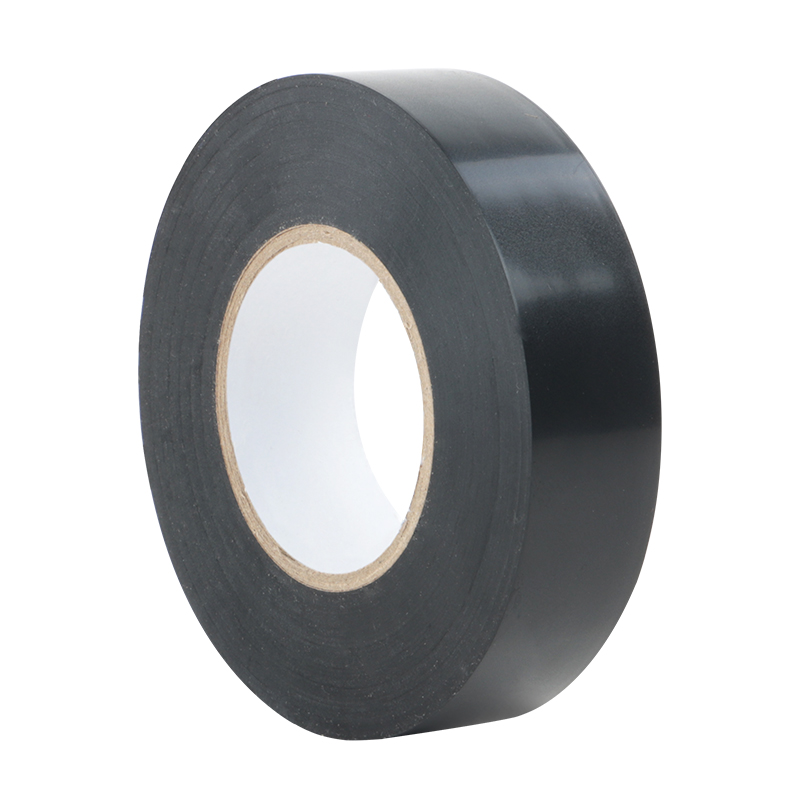
The chemical construction of the PVC film dictates how the tape will behave under tension over long periods. Lower-grade tapes typically utilize monomeric plasticizers. Manufacturers use plasticizers to transform naturally rigid PVC into a flexible film. Monomeric plasticizers feature short-chain chemical structures. While they are inexpensive to produce, they introduce severe operational trade-offs in the field. Monomeric tapes may stretch adequately during the initial application, feeling perfectly fine to the installer. Unfortunately, they suffer from rapid plasticizer migration.
Plasticizer migration occurs when the short-chain molecules physically move out of the PVC matrix over time. Heat, pressure, and contact with certain wire insulations accelerate this process. As the plasticizer leaves the film, the tape loses its elasticity entirely. It keeps its stretched shape permanently, demonstrating absolutely zero elastic memory. The compressive force around the splice vanishes. The backing becomes increasingly brittle. Eventually, the material cracks, splits, and fails, exposing the underlying bare conductors to the environment. Monomeric tapes simply cannot withstand long-term environmental exposure. Their inherent chemical instability makes them entirely unsuitable for critical infrastructure projects, industrial facilities, or any application requiring decades of reliable performance.
High-reliability environments demand polymeric PVC tapes. Polymeric plasticizers feature much longer, highly complex molecular chains. These long chains lock securely into the PVC matrix, resisting migration even under harsh environmental conditions. This structural stability provides massive advantages for field applications. The tape retains its flexibility and stretch characteristics years after the initial installation.
Polymeric construction delivers superior, long-lasting elastic memory. The material consistently attempts to return to its original state, maintaining the vital compressive seal around the splice indefinitely. Polymeric tapes also offer significantly better resistance to extreme temperature fluctuations. They do not become brittle and shatter in freezing weather, nor do they become overly soft and gooey in extreme heat. This consistent mechanical performance ensures long-term environmental protection. It drastically reduces the risk of premature insulation failure and eliminates the need for costly rework.
Feature | Monomeric PVC Tape | Polymeric PVC Tape |
|---|---|---|
Plasticizer Structure | Short-chain molecules. | Long-chain, complex molecules. |
Migration Risk | High. Plasticizers easily leach out of the PVC matrix. | Low. Molecules remain locked within the material. |
Elastic Memory | Poor. Tape stretches and permanently deforms. | Excellent. Tape continuously attempts to retract. |
Long-Term Flexibility | Becomes brittle and cracks over time. | Remains pliable and intact for years. |
Best Application | Temporary bundling or non-critical indoor wraps. | Permanent splices, industrial environments, and outdoor exposure. |
Standardized testing provides a reliable, objective baseline for evaluating manufacturer specification sheets. You should always look for strict ASTM D1000 compliance. This standard dictates rigorous testing protocols specifically designed for pressure-sensitive electrical tape. It establishes the exact laboratory methods for measuring elongation, ensuring that all manufacturers report their data using the same parameters. Quality general purpose electrical tape typically offers between 150% and 250% elongation under ASTM D1000 testing. The standard also measures adhesion to steel, adhesion to backing, and dielectric breakdown voltage. Using this standardized data allows procurement teams to compare different brands objectively, stripping away marketing claims and focusing purely on verified mechanical performance.
Phase identification and system marking require specific material considerations. When assessing PVC electrical color coding tape, visual integrity under tension matters immensely. Lower-quality color tapes suffer from a phenomenon known as "whitening" when stretched. The physical tension distorts the pigmentation within the PVC, causing the color to fade or turn white. This makes the phase color difficult to identify in dimly lit electrical panels. High-quality color coding tapes maintain their opacity and color density under heavy tension. Their pigments remain vibrant and distinct even at maximum elongation. You must verify this visual stability before specifying tape for complex wiring systems where accurate phase identification is critical for safety.
Evaluating upfront savings against long-term reliability demands careful analysis. Commodity tapes with low elongation and monomeric construction offer tempting initial savings. However, these savings quickly evaporate once the material reaches the field. Hidden costs accumulate rapidly through wasted labor and material. Frequent breakage during wrapping increases material usage significantly, as electricians discard snapped sections. Poor elastic memory leads to loose splices, requiring expensive rework and maintenance calls. Failed insulation introduces massive liability risks, potentially causing equipment damage or electrical fires. Specifying high-elongation, polymeric tape eliminates these downstream issues. It ensures reliable performance, speeds up installation, and drastically reduces overall labor requirements.
Flagging represents one of the most common and dangerous implementation risks in electrical taping. Flagging occurs when the very end of the tape lifts and unravels from the splice. This failure exposes the adhesive layer to dirt, dust, and moisture, permanently ruining the bond. Stretching the final wrap of tape primarily causes this issue. When an electrician pulls the tape tight right up to the cut, the stretched backing creates a strong retraction force. This force constantly pulls against the adhesive layer. Eventually, the elastic memory overpowers the adhesive bond, causing the end to lift and peel backward.
You can completely mitigate flagging through proper application technique. Industry best practice dictates applying the final inch of tape with absolute zero tension. You must stretch the tape tightly around the body of the splice to utilize its elastic memory and create a compressive seal. However, when you reach the end of the wrap, you must relax the tension completely. Cut the tape, lay the final inch down flat without pulling, and press it firmly into place with your thumb. This eliminates the retraction force at the most vulnerable point. The adhesive easily holds the unstretched end securely against the backing.
Environmental degradation poses another significant risk to tape performance. Extreme cold severely impacts both the PVC backing and the adhesive layer. Low temperatures cause the materials to stiffen dramatically. This stiffening drastically reduces the tape's elongation capabilities. The backing becomes brittle and highly prone to snapping under normal installation tension. The adhesive also loses its tackiness, failing to wet out and bond securely to cold wire jackets. Applying tape in freezing conditions without proper preparation often leads to immediate mechanical failure and loose wraps.
You must implement strict environmental matching strategies to prevent cold-weather failures. Always verify the tape's low-temperature application ratings on the technical data sheet before sending it to a winter job site. Standard commodity tapes often fail completely below freezing. You must store tape at room temperature prior to winter installations. Keeping the rolls in a heated truck cab or an inside pocket maintains their flexibility. The tape retains its elongation and adhesion properties until the exact moment of application, ensuring a secure wrap even in sub-zero environments.
Dielectric thinning occurs when installers apply excessive tension to the tape. Over-stretching physically thins the PVC backing. A tape rated for 600 volts relies on its specified thickness to provide that exact level of insulation. Stretching the tape too far reduces this thickness, directly lowering its voltage resistance per layer. You must utilize proper half-lap wrapping techniques to mitigate this risk. A half-lap wrap requires overlapping each turn of tape by 50% of its width. This technique ensures that at least two layers of tape cover every single point on the splice. This double layer easily compensates for the minor thinning caused by normal installation stretch, guaranteeing adequate dielectric protection.
Take the following actions to optimize your electrical tape procurement and installation processes:
Request comprehensive technical data sheets (TDS) from all potential suppliers to verify ASTM D1000 compliance for elongation and tensile strength.
Conduct physical field tests with your installation crews to evaluate stretch, elastic recovery, and adhesion under real-world tension.
Standardize your inventory exclusively on polymeric PVC constructions for any applications requiring long-term environmental exposure or critical infrastructure reliability.
Train all installation teams on the zero-tension finishing technique to permanently eliminate flagging and unraveling on job sites.
A: A good elongation percentage ranges from 150% to 250% for quality PVC tapes. This range ensures the tape stretches smoothly around irregular splices, split bolts, and sharp wire ends without snapping. It provides the necessary conformability for secure, airtight wraps while preventing frustrating breakage during high-speed field installation.
A: Flagging occurs when installers stretch the final wrap of tape. The stretched PVC backing possesses elastic memory, creating a constant retraction force. This force eventually overpowers the adhesive bond, causing the end to lift. You prevent this by applying the last inch of tape with absolutely zero tension.
A: Adhesion strength must perfectly balance the tape's elastic memory. When you stretch the tape, it constantly tries to return to its original shape. The adhesive must be strong enough to counteract this continuous retraction force. If the stretch force exceeds the adhesion strength, the tape will peel away.
A: Moderate, intended stretch maintains safety. However, severe over-stretching physically thins the PVC backing. This thinning reduces the material's thickness, which directly lowers its voltage resistance per layer. Installers must use half-lap wrapping techniques to ensure adequate insulation thickness across the entire splice.
A: Monomeric tapes use short-chain plasticizers that migrate over time, causing the tape to lose elasticity, permanently deform, and become brittle. Polymeric tapes use long-chain molecules that resist migration. They retain their elastic memory, flexibility, and structural integrity over long-term environmental exposure.
A: Low temperatures cause both the PVC backing and the adhesive layer to stiffen significantly. This stiffening drastically reduces the tape's elongation capacity. The material becomes brittle and is highly likely to snap during application. Always store tape in a warm environment before cold-weather installations.


