
close
Choose Your Site
Global
Social Media

 English

Views: 0 Author: Site Editor Publish Time: 2026-10-26 Origin: Site


Pipeline engineering is a relentless battle against dirt, moisture, and mechanical stress. Securing straight sections of a steel pipeline is a relatively straightforward procedure. However, protecting irregular shapes presents a formidable field challenge. Pipe bends, elbows, and flanges are notoriously difficult to seal. These specific areas act as high-stress zones within any fluid transport system. They are highly prone to moisture accumulation and structural fatigue. Without meticulous protection, rapid localized corrosion will inevitably compromise the entire network, leading to catastrophic leaks and massive excavation costs.
The definitive solution to this geometric challenge lies in mastering application mechanics. Applying the correct mechanical pulling force during installation is absolutely critical. By utilizing high-quality anti corrosion pipe wrapping tape with precise tension, field technicians can effectively eliminate trapped air pockets. This deliberate force ensures complete adhesion to the metal substrate and dramatically reduces localized pipe stress at these vulnerable junctions.
Key Takeaways
Optimal Tension Balance: The ideal wrapping tension requires a firm, consistent pull that stretches the material slightly—usually 1 to 5 percent elongation—without causing it to thin out or tear.
The 50 Percent Overlap Rule: Proper mechanical force is only effective when paired with correct placement. Maintaining at least a half-width overlap ensures robust, double-layer protection on complex geometries.
Material Matters: Highly flexible backing materials allow for superior conformability around heavy bolts, raised flanges, and sharp angles compared to rigid coating alternatives.
Avoiding Common Pitfalls: Over-stretching causes dangerous narrowing, while under-stretching leaves microscopic air pockets where moisture and rust thrive.
Understanding the physical and chemical risks at pipeline joints is the first step toward effective mitigation. Straight pipes offer a uniform, predictable surface. Joints and curves completely disrupt this uniformity. This disruption creates multiple vulnerabilities that demand specialized sealing strategies.
The physical topography of flanges and bends inherently complicates the application of protective layers. Flanges consist of raised faces, multiple protruding bolts, heavy nuts, and intersecting right angles. When applying standard protective materials, these sharp transitions act as physical barricades. If a material is too rigid, it will simply bridge across the gaps between bolts rather than hugging their contours. This bridging leaves empty cavities beneath the surface.
Bends present a different spatial issue. The geometry changes continuously along the curve. The outer curve expands, covering a larger surface area, while the inner curve compresses tightly. This shifting spatial reality makes it incredibly difficult to maintain a uniform, flat seal without highly practiced technique.
Pipelines are not dormant structures buried in the dirt. They are dynamic, shifting systems. Fluid dynamics within the pipe create persistent vibrations and sudden pressure surges. Beyond internal forces, these steel veins undergo constant thermal expansion and contraction dictated by shifting weather patterns and the varying temperatures of the transported medium.
Consequently, these micro-movements concentrate immense mechanical stress precisely at the joints. When a pipe expands under the summer sun, the protective wrapping must possess the elasticity to stretch and recover. If the coating at a flange joint lacks flexibility or was applied loosely, that concentrated mechanical stress will quickly cause the barrier to crack, delaminate, or shear off entirely.
Complex geometry combined with mechanical stress inevitably gives birth to moisture traps. When microscopic gaps are left around flange bolts, or when sloppy wrinkles form on the inner radius of a bend, hidden micro-environments are born. Groundwater, aggressive soil alkalis, and atmospheric humidity pool inside these tiny voids.
Specifically, this pooling triggers a severe, highly accelerated form of localized degradation known as crevice corrosion. Because oxygen levels inside these hidden crevices are drastically lower than on the surrounding exposed metal, a vicious electrochemical concentration cell forms. Rust eats into the steel unnoticed. Properly tensioned wrapping acts as the primary defense mechanism against the formation of these destructive pockets.
The pipeline integrity sector is currently experiencing a massive shift in how irregular joints are protected. Historically, operators relied heavily on rigid liquid epoxies or heat-shrink sleeves for flanges and bends. However, as global infrastructure rapidly ages and extreme weather events become more frequent, the limitations of rigid coatings are becoming glaringly obvious. Hard coatings often crack under dynamic soil stress or thermal expansion.
Furthermore, modern engineering protocols are pivoting strongly toward visco-elastic and cold-applied tape systems. Industry data shows a growing preference for materials that remain permanently flexible. Operators are demanding solutions that offer faster return-to-service times without the need for hot work permits or extensive curing periods. This trend heavily emphasizes the critical nature of human application mechanics. Because tape systems rely on pressure-sensitive adhesion, the field technician's ability to maintain correct wrapping tension has become the focal point of modern anti-corrosion training programs. The commercial value is clear: doing it right the first time prevents million-dollar excavation and repair campaigns down the line.
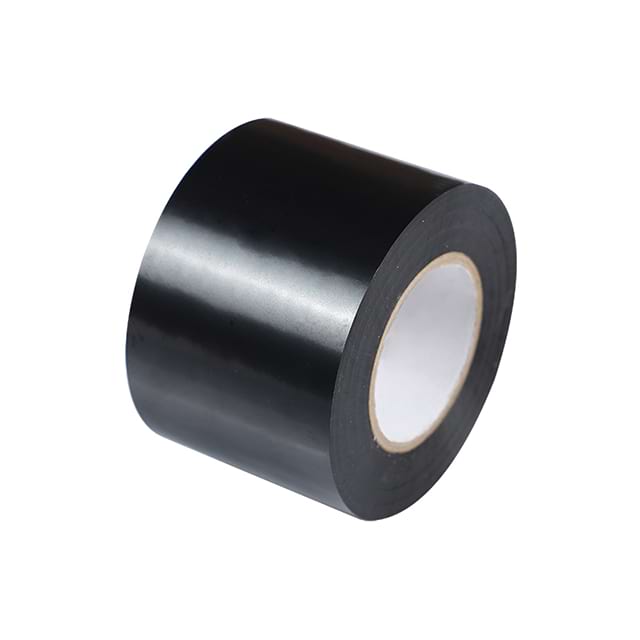
To effectively secure vulnerable infrastructure, field technicians must understand the underlying mechanics of their craft. Wrapping tension is not just an industry buzzword. It is a fundamental pillar of pipeline integrity management. It serves as the physical bridge between raw material quality and long-lasting field performance.
In the context of pipeline engineering, wrapping tension is the controlled, mechanical pulling force applied to a roll of tape as it is wound around the steel circumference. It is far more precise than simply pulling the material tight. It requires a calculated, unwavering resistance maintained by the applicator throughout the entire rotational process. This force ensures the material perfectly mirrors the microscopic peaks and valleys of the steel surface.
High-performance protective tapes rely heavily on pressure-sensitive adhesives. These dense, tacky compounds remain largely dormant until physical pressure forces them into action. When correct tension is utilized, the physical exertion of the pull forces the adhesive layer to liquefy slightly and flow.
This kinetic energy drives the adhesive deep into the steel's micro-pores, weld seams, and grinding marks. Simultaneously, this tight mechanical force acts like a squeegee. It aggressively displaces and pushes out ambient air that would otherwise remain trapped. Without this physical pull, the adhesive merely rests lazily on the highest peaks of the metal, resulting in a weak, temporary bond.
A frequent and costly error in field application is confusing tension with elongation. While deeply related, they represent distinctly different physical states. Tension is the active pulling force exerted by the human applicator or wrapping machine. Elongation is the subsequent physical stretching or deformation of the backing material resulting from that force.
Applying proper force means pulling firmly enough to activate the adhesive without destroying the material. Pulling too aggressively causes excessive elongation. When standard tapes are stretched beyond their engineered limits, the backing becomes dangerously thin. This severely compromises its dielectric strength and its ability to absorb impact from backfill dirt.
Navigating the complex contours of bends and flanges requires exacting precision. The correct application force ensures that the protective barrier remains a unified shield, unbothered by harsh environmental shifts or internal pipe vibrations.
To illustrate the commercial and structural impact of application mechanics, consider the following breakdown of tension states and their direct field consequences.
Application State | Visual Indicator | Adhesive Activation | Long-Term Field Risk |
|---|---|---|---|
Under-Tension | Wrinkles, sagging, visible air bubbles on inner curves. | Poor wet-out. Adhesive sits on top of steel profile. | Water ingress, crevice corrosion, immediate holiday test failure. |
Optimal Tension | Smooth, uniform second-skin appearance. Flat overlaps. | Full compression. Adhesive flows into micro-pores and bolt threads. | Decades of maintenance-free protection. High dielectric strength. |
Over-Tension | Necking, tape narrows significantly, backing looks translucent. | Adhesive is pushed out of the overlap zones. | Backfill puncture, electrical shorts, material tearing under thermal shifts. |
Unlike straight runs of pipe, bends demand dynamic, on-the-fly tension control. The applicator cannot blindly use the exact same pulling force throughout a 90-degree elbow transition. When navigating the curve, the technician must adapt to the shifting radius.
On the outer radius, the material must stretch to cover a longer distance. Here, the applicator must lean into the wrap, applying a slightly firmer pull to ensure the material stretches just enough to lay flat without tenting over the curve. Conversely, on the inner radius, the steel surface area compresses sharply. Pulling too hard here will cause the tape to aggressively bunch up. The applicator must slightly relax their grip, relying heavily on manual hand-smoothing to press the tape down cleanly without creating moisture-trapping folds.
Achieving a flawless, long-lasting seal requires a methodical, systematic approach. Skipping steps or rushing the process guarantees premature failure. Following a standardized procedure ensures that mechanical force is applied correctly and the joint is fully encapsulated.
Before a single inch of tape touches the pipe, the steel must be meticulously prepared. Technicians must rigorously wire-brush or mechanically grind the metal down to a bare, textured finish. This removes all stubborn mill scale, grease, and loose rust. Once the steel is immaculately clean and dry, a compatible synthetic liquid primer is painted on. This primer acts as a chemical bonding agent, preparing the raw steel to aggressively grip the incoming adhesive.
Because flanges possess sharp 90-degree angles and deep bolt crevices that tape alone simply cannot bridge, a secondary material is required. Technicians must firmly pack a moldable profiling mastic or synthetic flange filler around the bolts and into the deep gaps between the flange faces. By sculpting this putty into a smooth, sloped contour, the sharp angles are eliminated. This allows the subsequent tape to be applied smoothly without tearing.
With the mastic smoothed out, the primary wrapping phase begins. The technician must grip the roll firmly, applying continuous, heavy pressure. Starting slightly back on the straight pipe section, the wrap proceeds directly over the contoured mastic covering the flange. When navigating the curve of a bend, the applicator dynamically adjusts their pull. They stretch slightly more on the outside curve and carefully guide the slack on the inside curve, all while maintaining a strict 50 percent overlap.
Immediately after the roll is cut, the applicator must go back over the joint with heavy, manual hand pressure. Pressing and smoothing the wrapped area forces out any lingering microscopic air bubbles and ensures the overlapping layers have chemically fused. A final visual inspection confirms that the pulling force has not caused the edges of the tape to lift or tent over the irregular mastic beneath.
Even when armed with premium materials, poor execution will severely compromise pipeline integrity. Recognizing and avoiding these frequent field errors is the only way to ensure a durable, leak-proof seal.
A surprisingly common error made by overzealous technicians is applying far too much muscle during the wrap. When the material is stretched violently beyond its intended yield point, it suffers from necking. The tape physically narrows, losing its width, and its backing becomes dangerously thin. This severe reduction in thickness destroys the dielectric strength of the coating, leaving the pipe highly vulnerable to stray electrical currents and sharp rocks in the backfill.
On the opposite end of the spectrum, wrapping the pipe too gently is equally disastrous. Under-tensioning completely fails to activate the pressure-sensitive adhesive, leaving slack in the material. This slack instantly manifests as ugly wrinkles and structural voids known in the industry as holidays. These hollow voids act as direct, welcoming highways for groundwater to travel straight down to the bare steel.
Selecting the appropriate raw material is just as vital as the wrapping technique itself. Not all protective products are engineered to survive the complex, jagged geometry of industrial flanges and heavy bends. Engineers must look beyond basic descriptions and evaluate specific product parameters to ensure field success.
For irregular topographies, a highly flexible backing material is absolutely non-negotiable. Stiff, rigid tapes that perform wonderfully on long straightaways will inevitably bridge over gaps or snap entirely when forced around a heavy flange nut. When choosing PVC pipeline protection tape, look for an elongation at break exceeding 150 percent. This ensures the material can stretch under human force and conform perfectly to the underlying profiling mastic without losing its structural integrity.
Adhesive thickness is another critical metric. The sticky underside must be thick enough to swallow the micro-pores of the metal and fuse seamlessly with the overlapping layers. For bends and heavy joints, utilizing a pipe wrapping protective tape featuring an extra-heavy rubber or modified bitumen adhesive mass is highly recommended. A thicker adhesive layer—often bringing the total tape thickness to between 0.15mm and 0.25mm—provides a vastly superior wet-out effect when pulled tight. This guarantees that minor surface bumps and grinding marks are completely encapsulated.
Finally, the chosen barrier must possess high dielectric strength, typically rated above 40kV/mm. This electrical resistance is paramount for buried lines, preventing cathodic protection currents from leaking and stopping electrochemical corrosion in its tracks.
Flawless application secures the joint for today, but ensuring decades of pipeline integrity requires a commitment to ongoing monitoring. Routine care verifies that the tensioned barrier continues to hold the line against environmental decay.
Scheduled visual walkthroughs are necessary to assess the external health of above-ground joints. Inspectors must actively look for red flags such as sagging material, brittle cracking, or peeling edges around the flange face. Any visible wrinkles or areas where the wrap appears to have lost its tight grip indicate that moisture has likely breached the perimeter, requiring immediate excavation and repair.
Because the human eye cannot see microscopic flaws, technology must step in. To guarantee the tensioned wrap is entirely impermeable, inspectors utilize electronic holiday detectors. These devices sweep a calibrated high-voltage electrical current over the surface of the wrapped joint. If there is even a microscopic pinhole, a hidden void, or an area of severe thinning due to over-stretching, the current will instantly arc down to the steel pipe. This triggers a loud alarm and pinpoints the exact location of the failure.
Safeguarding the irregular geometries of pipe bends and flanges requires a perfect marriage between premium materials and exacting human technique. Proper wrapping tension is the vital bridge connecting the two. By maintaining a firm, consistent pull, dynamically adjusting for curves, and strictly adhering to overlap rules, technicians can eliminate moisture traps and neutralize mechanical stress. Mastering these application mechanics ensures that a pipeline's most vulnerable junctions remain securely sealed against corrosion for decades to come.
If you are looking to upgrade your pipeline integrity management with materials engineered for complex geometries, ensure you select products that meet strict industrial parameters. For high-performance solutions tailored to your specific project needs, explore the professional-grade options available at https://www.ipvctape.com to secure your infrastructure today.
While the baseline mechanical force is similar, bends absolutely require dynamic tension control. You must pull slightly firmer on the outer radius to stretch the material over the curve, while simultaneously relaxing the pull and carefully hand-smoothing the inner radius to prevent the material from bunching up and wrinkling.
Pulling too aggressively causes a phenomenon known as necking. The tape physically narrows and the backing material becomes dangerously thin. This severely lowers the dielectric strength of the coating, making it highly susceptible to punctures from backfill and reducing its overall lifespan.
Flanges require highly conformable materials with excellent elasticity. More importantly, tape alone is rarely enough. You must first apply a moldable profiling mastic or flange filler to smooth out the sharp 90-degree angles and deep crevices around the bolts before executing the final tensioned wrap.
You should feel a firm, unwavering resistance as you pull the roll around the pipe. Visually, the applied material should lay completely flat against the steel contour without any wrinkles, sagging, air bubbles, or tenting across gaps. The finished joint should look like a tight, uniform second skin.
Extreme temperatures significantly alter tape behavior. In freezing conditions, adhesives become stiff, requiring more mechanical force to achieve proper wet-out. In extreme heat, the backing becomes highly pliable, making it very easy to accidentally over-stretch the tape. Technicians must adjust their pulling force based on ambient weather conditions to maintain uniform thickness.
Wrapping tension is the active, mechanical pulling force exerted by the technician during application. Elongation is the physical result of that force—the percentage by which the tape stretches. Proper tension activates the adhesive and removes air, resulting in a minor, safe amount of elongation. Excessive tension leads to dangerous over-elongation, which damages the tape's structural integrity.


