
close
Choose Your Site
Global
Social Media

 English
Views: 0 Author: Site Editor Publish Time: 2026-08-23 Origin: Site


Modern vehicle architectures rely on miles of complex wiring. Protecting these harnesses dictates overall vehicle reliability and safety. Misapplying standard electrical tape in high-heat or high-abrasion zones leads to electrical shorts, blown fuses, and heavy warranty claims. Conversely, over-engineering interior zones with premium materials unnecessarily inflates production costs. Finding the exact balance between material capability and application environment determines the success of any wiring project.
To optimize performance and cost, technicians must evaluate specific vehicle zones. You need to understand exactly where PVC tape provides reliable protection and where environmental extremes demand specialized high-temperature alternatives. Selecting the wrong adhesive backing or temperature rating compromises the entire electrical system. Proper tape specification prevents wire chafing against sharp metal edges, blocks moisture ingress in wet cavities, and ensures long-term adhesive stability under constant road vibration.
Zone-Specific Selection is Mandatory: PVC tape is highly effective and cost-efficient for interior and cabin wiring (rated up to 80°C–105°C), but fails rapidly in engine bays.
Thermal and Chemical Thresholds: Engine compartments and exhaust-adjacent routing require high temperature harness insulation tape (120°C to 150°C+) to withstand radiant heat, thermal cycling, and automotive fluids.
Abrasion and NVH Factors: Beyond temperature, tape selection must account for physical wear (chassis routing) and Noise, Vibration, and Harshness (NVH) requirements (dashboard routing).
Compliance Drives Procurement: Selecting tapes that meet strict OEM standards (e.g., LV 312) ensures long-term adhesive stability and prevents common failures like "flagging" or unraveling.
Car manufacturers have explicitly moved away from generic, hardware-store smooth plastic electrical tapes. Early automotive assembly relied heavily on standard vinyl tapes, which quickly proved inadequate for the harsh realities of vehicular environments. Standard tapes utilize basic rubber adhesives that dry out, crack, and lose their bond when exposed to engine heat or cabin greenhouse effects. Automotive engineers now specify engineered harness solutions designed to survive decades of continuous vibration, extreme temperature swings, and chemical exposure.
Primary success criteria for harness protection go far beyond simple electrical insulation. Dielectric strength remains fundamental to prevent arcing between adjacent wires, especially in high-voltage EV applications. Fluid resistance ensures the tape barrier does not dissolve when exposed to motor oil, DOT 4 brake fluid, or washer solvents. Flexibility allows technicians to route thick wire bundles through complex branching paths, tight firewall grommets, and narrow structural pillars without tearing the protective layer. Long-term adhesive stability keeps the bundle tight, preventing individual wires from breaking out of the harness loom and rubbing against sharp metal chassis components.
Adhesive integrity directly impacts the lifespan of the wiring harness. "Flagging" occurs when the end of a wrapped tape strip loses its adhesion and begins to unwind, resembling a flag blowing in the wind. Constant road vibration accelerates this failure mode. Specifying a dedicated Automotive Wire Harness Tape ensures the adhesive formulation resists flagging. These specialized adhesives, often advanced acrylics or synthetic rubbers, cure and bond aggressively to their own backing. This creates a unified, solid protective jacket around the wire bundle that will not unspool over a 15-year vehicle lifespan.
Polyvinyl Chloride (PVC) possesses specific physical traits that make it highly effective for harness applications. High elongation allows the material to stretch significantly before breaking. This stretchability provides excellent conformability around tight bends, complex splices, and multi-wire junctions where rigid tapes would buckle or gap. PVC naturally repels water, offering reliable moisture resistance in damp environments. The smooth surface finish prevents dust and dirt accumulation, keeping the harness clean during the final vehicle assembly stages and making it easier to slide through tight routing channels.
Assembly speed relies heavily on material handling characteristics. PVC's inherent flexibility allows for easy positioning and routing of the harness during the manufacturing process. Technicians can manipulate wrapped bundles through tight firewall grommets and narrow dashboard cavities without fighting stiff, unyielding tape layers. This ease of handling makes PVC the most common tape for general applications across global assembly lines. It conforms easily to the irregular shapes of inline connectors and splice joints, providing a uniform outer diameter for the finished harness.
Cost efficiency drives the massive volume of PVC tape used in modern vehicles. When wrapping miles of low-stress wire bundles, manufacturers need a material that balances reliable performance with aggressive cost controls. PVC delivers an exceptional cost-to-performance ratio. It provides necessary dielectric protection and basic abrasion resistance at a fraction of the cost of woven fiberglass or specialized fleece tapes. For high-volume production, a quality PVC automotive wire wrap tape remains the default choice for benign vehicle zones.
Standard PVC tape has distinct upper temperature limits. Degradation typically begins as the material softens, losing its structural integrity and adhesive grip above 90°C to 105°C. In high-heat zones, the plasticizer within the PVC can migrate, causing the tape to become brittle and crack. Once the tape cracks, the underlying wires are exposed to environmental hazards and potential short circuits. Engineers must map the thermal profile of the vehicle to ensure PVC is never specified in areas that exceed its glass transition temperature.
Thermal cycling presents another severe challenge. Vehicles operate in extreme temperature fluctuations. A harness might sit in a -30°C parking lot overnight and then rapidly heat up as the engine runs. Standard PVC struggles with this rapid expansion and contraction. Without specific cold-resistant formulations, standard PVC loses flexibility in sub-zero winter environments, shattering under mechanical stress if a technician attempts to bend the harness during cold-weather repairs. Conversely, extreme heat causes the adhesive to liquefy, leading to a sticky, unspooled mess that contaminates surrounding components.
Abrasion vulnerability limits PVC usage in exterior zones. Compared to woven cloth or filament alternatives, smooth plastic PVC offers low abrasion resistance. If a PVC-wrapped harness rubs against a vibrating metal bracket, the metal will quickly slice through the thin plastic layer. Engineers must identify these high-friction pinch points and transition away from PVC to prevent wire chafing. Even a minor abrasion that exposes a single copper strand can ground out a critical sensor, triggering check engine lights and drivability issues.
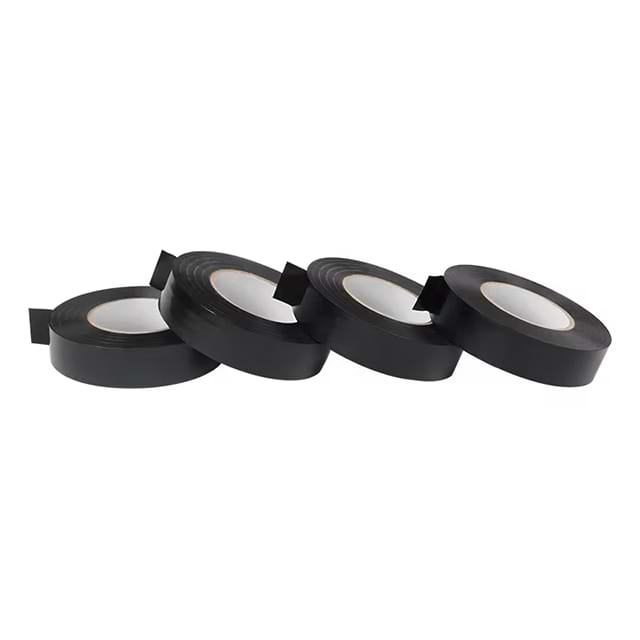
The vehicle interior represents the ideal environment for PVC tape applications. Dashboards, infotainment systems, seating harnesses, and interior lighting circuits all benefit from PVC wrapping. These areas require extensive wire bundling to manage the dozens of circuits powering modern cabin electronics. The flexibility of PVC allows these thick bundles to snake behind trim panels, under carpets, and through center consoles without bulging or restricting component fitment.
Environmental realities inside the cabin are relatively benign. Temperatures remain stable and are tiered by specific location. General cabin wiring along the floorboards operates safely between 60°C and 80°C. Underdash routing, which sits closer to the firewall and HVAC heater cores, may see temperatures up to 90°C. These zones experience minimal exposure to harsh chemicals, UV light, or standing moisture, perfectly aligning with PVC's operational thresholds.
Implementation strategies often involve utilizing PVC for the primary bundling and routing structure. However, engineers must navigate a specific trade-off regarding Noise, Vibration, and Harshness (NVH) standards. PVC is an excellent bundling agent but a poor acoustic dampener. A hard plastic harness vibrating against a plastic dashboard creates unacceptable cabin rattle. To solve this, technicians often wrap the base PVC bundle with a secondary layer of fleece or cloth tape in specific contact areas, combining PVC's structural hold with the rattle-reduction properties of fleece.
Door panels, liftgates, and trunk routing present a different set of environmental challenges. These cavities experience moderate temperature fluctuations but carry a high risk of water ingress and humidity. Rainwater routinely bypasses window seals, draining through the inside of the door shell. Wiring harnesses routed through these areas must withstand constant moisture exposure without degrading or allowing water to reach sensitive electrical connectors.
Leveraging PVC's natural moisture-barrier properties provides the best defense for these zones. Unlike cloth tapes that absorb and hold water against the wires, PVC repels moisture entirely. Technicians use PVC to protect splices and seal the backshells of connectors. Ensuring a tight, 50%-overlap wrap prevents water from pooling within the harness structure. This wrapping technique forces water to shed off the harness exterior, protecting the internal copper strands from galvanic corrosion. Technicians also utilize PVC tape to create "drip loops," forcing water to drip off the lowest point of the harness rather than tracking directly into a window motor or door lock actuator.
Engine compartments represent the most hostile environment for electrical wiring. Engine blocks, alternator routing, battery cables, and radiator fans all require robust harness protection. The proximity to combustion chambers and exhaust manifolds generates extreme radiant heat. Temperatures routinely spike from 120°C to well over 150°C in localized hotspots. Furthermore, these harnesses face direct, repeated exposure to motor oil, engine coolant, brake fluid, and aggressive degreasers during maintenance.
Smooth plastic PVC tape must be completely abandoned in these zones. Standard PVC will melt, its adhesive will liquefy, and the bare wires will quickly short against the engine block. Instead, engineers specify a high temperature harness insulation tape constructed from woven PET (polyethylene terephthalate), fiberglass, or specialized cross-linked materials. These advanced substrates resist thermal degradation and chemical melting. They maintain their structural integrity and adhesive bond even when soaked in boiling coolant or exposed to radiant exhaust heat. For pigtails routing directly over the exhaust manifold, fiberglass tapes with an aluminum reflective layer are often deployed to deflect radiant heat away from the copper conductors.
Exterior routing demands extreme mechanical durability. ABS sensor wiring, transmission routing, and exterior lighting harnesses run along the exposed chassis and inside wheel wells. These zones face relentless physical punishment. High mechanical abrasion from flying gravel, road debris, and salt spray constantly attacks the wire protection. Additionally, harnesses routed near suspension components must endure millions of flex cycles as the vehicle navigates uneven terrain.
Transitioning to heavy-duty cloth tapes, woven cotton, or filament tapes solves these mechanical challenges. These materials offer superior tear resistance and structural integrity against physical impacts. A rock striking a PVC-wrapped harness will likely pierce the plastic and damage the wire. The same rock striking a heavy-duty woven cloth tape will simply bounce off the dense fiber matrix. For underbody applications, physical toughness supersedes all other tape metrics. These tapes are often paired with heavy-duty rubberized coatings to prevent salt water from penetrating the cloth and corroding the wires inside.
Engineers must balance thermal ratings, abrasion resistance, and NVH dampening when specifying tape for a new vehicle platform. Using a structured evaluation lens prevents both dangerous under-specification and costly over-specification. The following matrix outlines the standard material choices based on specific zone requirements.
Vehicle Zone | Recommended Material | Max Temp Rating | Abrasion Resistance | NVH Dampening |
|---|---|---|---|---|
Cabin Floor / Seating | Standard PVC | 80°C - 105°C | Low | Low |
Underdash / Console | Fleece / PET Cloth | 105°C | Medium | High |
Door Cavities (Wet) | Premium PVC | 105°C | Low | Low |
Engine Perimeter | Woven PET | 125°C - 150°C | High | Medium |
Exhaust Proximity | Fiberglass / Aluminum Foil | 150°C+ | High | Low |
Mapping specific tape materials to standard automotive temperature tiers ensures reliability. Cabin zones require 60–80°C ratings. Underdash routing pushes that requirement to 90°C. The general engine perimeter demands 105°C to 125°C stability. Direct engine block and exhaust proximity routing strictly require 120°C–150°C+ capabilities. Never downgrade a temperature tier to save material costs, as the resulting electrical failures will far outweigh any initial savings.
The backing material is only half of the equation; the adhesive chemistry dictates how long the tape will stay in place. Automotive tapes generally utilize three categories of adhesives, each suited for different environmental exposures.
Adhesive Type | Initial Tack | Heat Resistance | Fluid Resistance | Primary Application |
|---|---|---|---|---|
Synthetic Rubber | Very High | Low (Up to 105°C) | Moderate | Interior PVC bundling |
Advanced Acrylic | Moderate (Requires pressure) | High (Up to 150°C) | Excellent | Engine bay PET cloth |
Silicone | Low | Extreme (150°C+) | Excellent | Exhaust proximity fiberglass |
Rubber adhesives grab quickly, making them ideal for fast-paced assembly lines where workers need the tape to stick immediately to the wire insulation. However, rubber breaks down under high heat. Acrylic adhesives require firm pressure to activate and take up to 24 hours to fully cure, but once set, they offer superior resistance to engine oils and extreme temperatures. Silicone adhesives are reserved for the most extreme heat zones, typically paired with fiberglass backings.
Specifying tapes that meet international and OEM testing standards guarantees baseline performance. The LV 312 standard specifically governs adhesive tapes in automotive wire harnesses, dictating rigorous testing for temperature resistance, fluid compatibility, and acoustic damping. For example, LV 312 requires a 3000-hour heat aging test to simulate long-term exposure, followed by a cold bend test at -40°C to ensure the tape does not shatter. USCAR specifications provide similar stringent guidelines for the North American market. Adhering to these standards ensures the tape will perform predictably over the vehicle's intended lifespan.
Regulatory alignment also drives procurement decisions. Tapes must comply with RoHS (Restriction of Hazardous Substances) directives, ensuring no heavy metals or restricted chemicals enter the manufacturing stream. Furthermore, interior tapes must meet specific flame retardancy requirements, such as FMVSS 302. This standard dictates the burn rate of interior materials, ensuring that a localized electrical short does not rapidly ignite the entire vehicle cabin. Tapes that fail the FMVSS 302 vertical burn test cannot legally be installed in passenger compartments.
Correct installation methodology determines the ultimate success of the harness protection. Maintaining proper tension during wrapping ensures a tight, secure bundle. However, technicians must avoid stretching the tape to the point of structural failure. Over-stretching PVC thins the material, drastically reducing its dielectric strength and abrasion resistance. It also creates internal mechanical stress that causes the tape to shrink and pull back from the ends over time.
The industry-standard 50% overlap rule governs continuous harness wrapping. Each revolution of the tape roll should cover exactly half of the previous wrap. This technique creates a double layer of protection across the entire harness length. It maximizes moisture resistance and ensures the bundle remains rigid enough to route smoothly while retaining necessary flexibility for installation.
Clean the wire surface thoroughly to remove manufacturing oils, dust, and drawing compounds before applying tape.
Anchor the initial wrap with two full overlapping turns to establish a strong base adhesion point.
Maintain consistent tension while wrapping, pulling the tape firmly without stretching the backing material beyond its elastic limit.
Execute a 50% overlap on every turn, angling the roll slightly to create a uniform double layer of protection.
Terminate the run by applying the final two wraps directly over themselves with zero tension, then press firmly to activate the adhesive and prevent flagging.
Incorrect tape specification leads directly to adhesive oozing in hot environments. When a low-temperature tape is installed in a high-heat zone, the adhesive breaks down into a sticky, viscous fluid. This oozing contaminates surrounding components, attracts abrasive dirt, and leaves the wire bundle loose and unprotected. Selecting the correct temperature tier eliminates this failure mode entirely.
Wire chafing poses a severe danger when a tape with insufficient abrasion resistance is routed against sharp metal chassis edges. The constant vibration of the running vehicle acts like a saw blade against the harness. If PVC is used in these high-friction pinch points, the metal will quickly expose the copper wire, causing intermittent shorts or complete electrical failure.
Implementing hybrid protection strategies mitigates these risks effectively. Engineers frequently combine PVC tape for base bundling with secondary mechanical shielding. In high-friction areas, the PVC-wrapped bundle is inserted into corrugated plastic split loom or braided nylon sleeving. The technicians then spot-tape the ends of the loom to secure it. This hybrid approach utilizes the cost-efficiency of PVC for general wire management while relying on the heavy-duty tubing to defeat localized abrasion hazards.
PVC tape remains a foundational material for interior and moisture-prone vehicle zones. Its flexibility, moisture resistance, and cost-efficiency make it indispensable for cabin and door routing. However, it becomes a severe liability if applied in high-heat or high-abrasion environments. Misapplying PVC in the engine bay guarantees premature electrical failure.
Audit existing harness failure data to identify zones where misapplied tape causes chafing or adhesive degradation.
Review current OEM specifications and update internal routing guidelines to match LV 312 and USCAR standards.
Request technical data sheets and physical samples from tape manufacturers to conduct internal NVH and thermal testing.
Implement hybrid protection strategies in high-risk pinch points, combining base tape wraps with corrugated split loom to maximize durability.
A: No. Standard hardware-store electrical tape lacks the thermal stability, chemical resistance, and specialized adhesives required to withstand automotive vibration and temperature fluctuations. Using standard tape leads to rapid unwinding, adhesive failure, and eventual electrical shorts.
A: Automotive-grade PVC tape is generally rated for operating temperatures between 80°C and 105°C. This makes it suitable for cabin (60–80°C) and underdash (90°C) wiring, but completely inadequate for the extreme heat of engine compartments.
A: Engine bays require high temperature harness insulation tape, such as woven PET (polyethylene terephthalate), fiberglass, or specialized cloth tapes. These materials can withstand continuous exposure to 120°C–150°C+, severe thermal cycling, and aggressive automotive fluids.
A: Preventing unraveling (flagging) requires using tape with automotive-grade acrylic or rubber adhesives. You must apply it with proper tension, utilize a 50% overlap, and ensure the wire surface is entirely free of oils and dust before wrapping. Apply the final wrap with zero tension.
A: PVC tape provides minimal NVH dampening. If a wiring harness is routed behind a dashboard where it may rattle against hard plastic panels, fleece or cloth tapes are preferred for their superior acoustic noise-reduction properties.
A: While PVC offers good resistance to water and humidity (making it ideal for door cavities), prolonged exposure to engine oil, brake fluid, or fuel can degrade the adhesive backing of standard PVC tapes. Chemical-resistant alternatives are necessary in those specific fluid-heavy zones.


